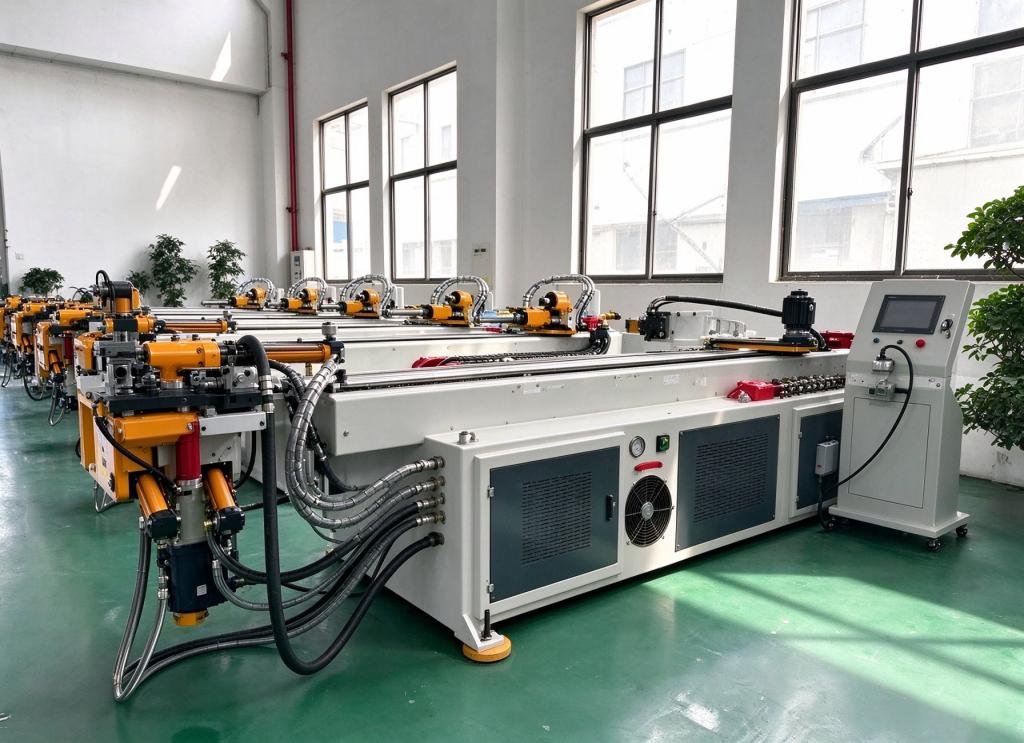
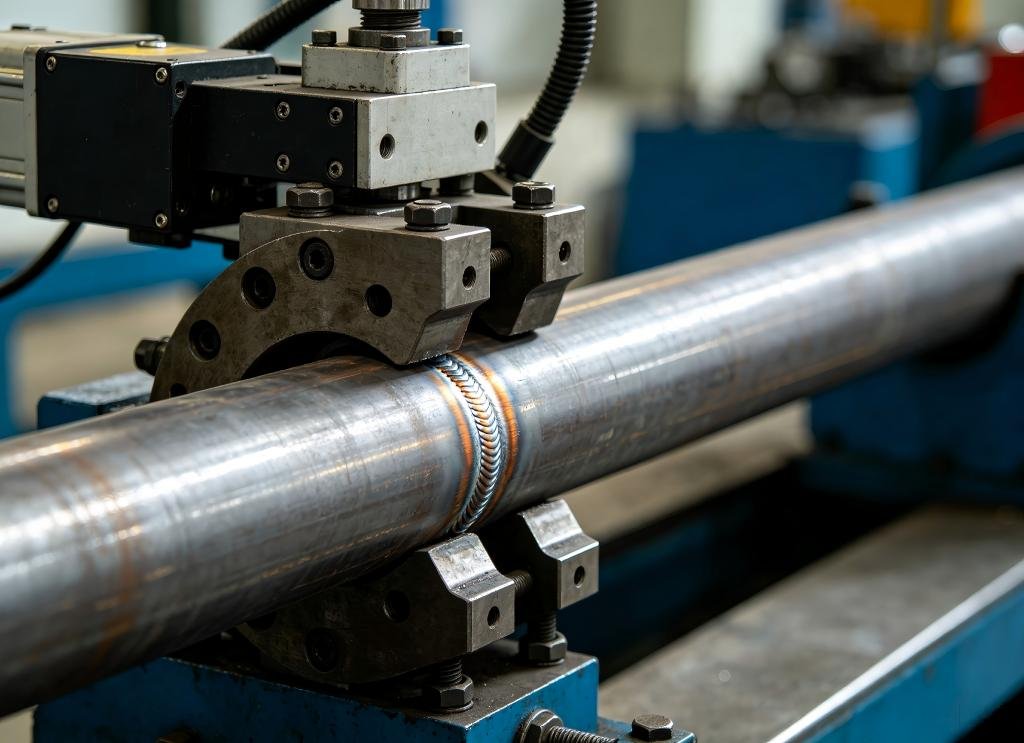
Bicycle Mandrel Tube Bending Machine: The Invisible Skeleton Behind a Wrinkle-Free Bike Frame
News 2026-11-12
A bicycle looks simple, yet it is essentially a precise assembly of thin-wall metal tubes. The head tube, top tube, down tube, seat tube and rear stays of a frame, the legs of a front fork, plus handlebars, racks and kickstand loops, are all formed from thin-wall aluminum, steel or titanium tube, then cut, bent and welded together. The quality of these bends directly decides the strength, weight, appearance and riding safety of the finished frame. Bending a tube with a wall thickness of barely one millimeter into a clean, full, wrinkle-free arc is beyond ordinary bending methods — and that is exactly why the mandrel tube bending machine has become an irreplaceable core asset in bicycle manufacturing.
Why Bicycle Tubes Are So Hard to Bend
Bicycle frame tubes are classic thin-wall stock: modest diameter, thin wall, and high strength requirements. During bending, the material outside the neutral axis stretches and thins, while the inside is compressed and thickens. Thin-wall tubes have little resistance to instability, so the inner wall easily buckles under compressive stress and forms wave-like wrinkles. At the same time the cross-section flattens into an oval, and excessive thinning on the outer wall weakens the frame precisely where loads are highest. A mountain bike down tube absorbs impact loads, and a road bike down tube or fork leg has to hold a tight aerodynamic profile — once visible wrinkles or flattening appear in the bend, the tube is usually scrapped.
Hydraulic benders rely on the tube’s own stiffness to “brute-force” the bend, which works for thick-wall tube but struggles with precision thin-wall bicycle stock. A mandrel bender takes a different approach: it attacks the problem from inside the tube, supporting the inner wall at the exact moment deformation happens.
The Mandrel: A Skeleton Hidden Inside the Tube
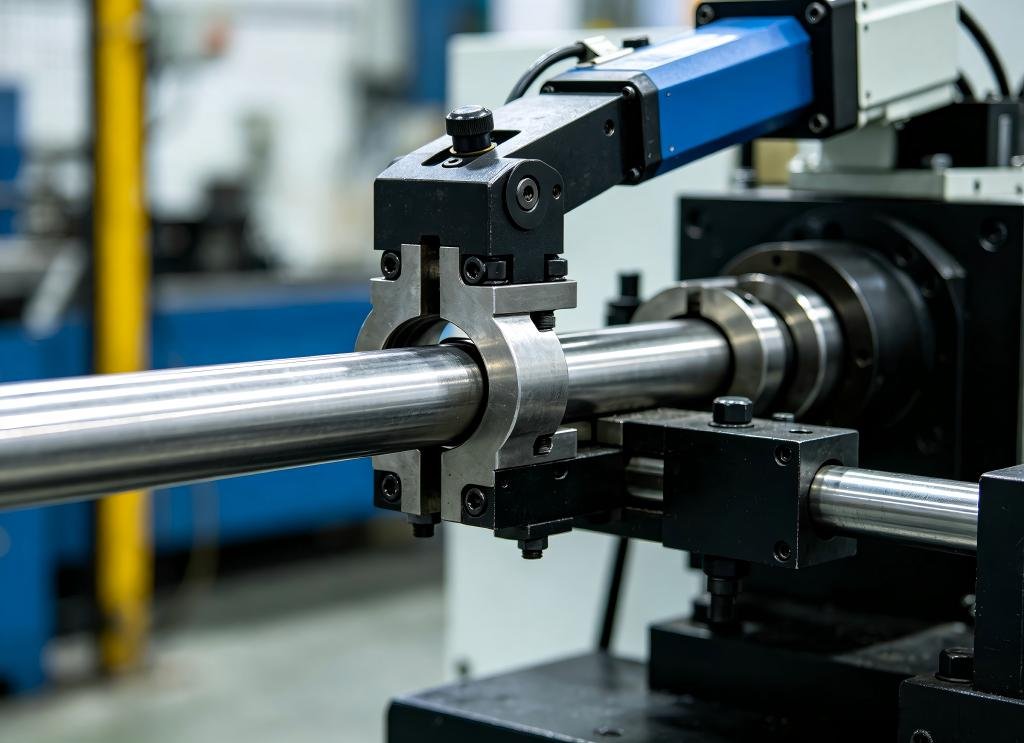
A mandrel is a support rod inserted into the tube and stopped precisely inside the bend zone, with an end that may be a single ball head, a series of linked balls, or a flexible articulated structure. During the bend, the clamp die locks the tube against the bend die, the pressure die pushes the tube around the die, and the wiper die presses against the inner side to suppress wrinkles. The mandrel sits just ahead of the tangent point, using its own rigidity to hold up the inner wall and restrain compression buckling and cross-section distortion.
With mandrel support, inner-wall wrinkling on thin-wall tube is effectively suppressed, ovality drops noticeably, and wall thinning stays within a controlled range. The mandrel is, in effect, an invisible skeleton inside the tube — and it is what decides whether the finished arc looks full and smooth or tired and collapsed.
Choosing the Right Mandrel Type
Different parts and different bend radii call for different mandrel forms. Common structures include: plug mandrels, simple and suited to larger radii and thicker walls; single-ball mandrels with one ball at the tip, offering good versatility; multi-ball linked mandrels, where two or more balls are joined by flexible joints so the support follows the bend curve section by section — the choice for tight-radius, thin-wall, high-difficulty bends; universal-joint mandrels that articulate in several directions for complex geometry; and “crawling-ball” segmented mandrels built from a chain of movable links, the most flexible option for extreme small-radius thin-wall work. The selection logic is straightforward: the smaller the bend radius, the thinner the wall and the lower the material elongation, the longer and more flexible the mandrel support needs to be. Bicycle frames typically use thin-wall aluminum tube with compact bend radii, so multi-ball or universal mandrels are usually the first choice.
Mandrel Advance: Where Fractions of a Millimeter Decide Everything
The core tuning parameter in mandrel bending is the mandrel advance — the distance by which the mandrel tip protrudes past the tangent point of the bend. Too little advance and the support arrives late: the inner wall still wrinkles. Too much and the mandrel digs too deep into the deformation zone: the outer wall is stretched beyond its limit, causing excessive thinning at best and tube cracking or a mandrel seized inside the tube at worst. For thin-wall bicycle tube, the workable window is often only a fraction of a millimeter, determined by trial bends against tube diameter, wall thickness, bend radius and material behavior. CNC benders give the mandrel its own servo axis, so during tooling trials the advance can be stepped forward in fractions of a millimeter with perfect repeatability. Once dialed in, the value is stored in the program and recalled with one click at product changeover — something mechanically indexed machines simply cannot match.
Tooling Is a System, Not a Set of Parts
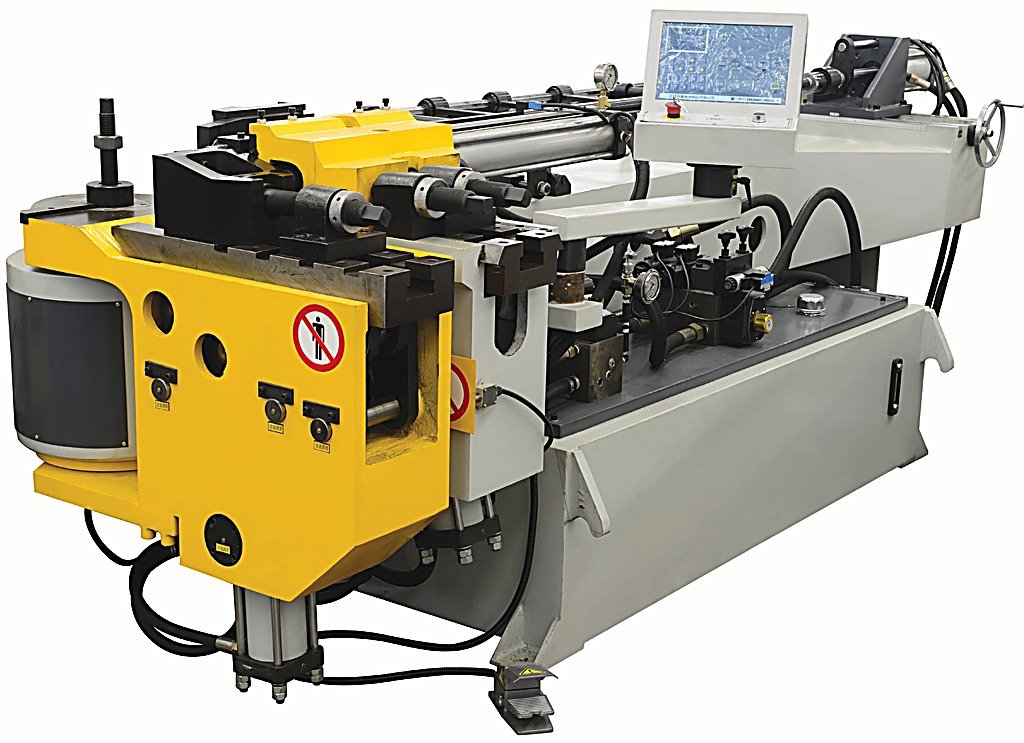
Mandrel bending tooling works only as a matched system. The clamp die holds the tube head — grip pressure must be firm enough to prevent slipping but gentle enough not to mark the surface. The pressure die pushes the tube along the bend: too little pressure causes slippage, too much aggravates inner-wall wrinkling. The wiper die’s edge sits tight against the tangent line of the bend die and “wipes away” the tendency of the inner wall to fold, so its clearance to the tube must be controlled precisely. The bend die itself defines the bend radius and the cross-section geometry. If any single clearance or pressure is out of match, the defect shows up on the tube immediately. Typical corrective paths in production: for wrinkling, raise pressure-die force, advance the mandrel, and check wiper-die edge seating; for outer-wall thinning or cracking, retract the mandrel slightly and reduce bending speed; for excessive ovality, verify the fit between mandrel ball diameter and the tube’s inner diameter.
Springback: The Physics No Bender Can Escape
Every metal springs back a little after bending. The amount varies with material, bend radius and even batch-to-batch tube differences. CNC benders handle this with overbend compensation: if the drawing calls for ninety degrees, the program bends to ninety-two or more, with the exact compensation measured and corrected automatically from the first article. Advanced machines add bend-radius compensation and dynamic correction between bends, keeping cumulative angular error across multi-bend parts extremely small. For frame members, which are bent in pairs and must mirror each other, springback compensation accuracy directly decides left-right symmetry.
What Makes Bicycle Production Special
Bicycle tube work carries its own industry fingerprint. Appearance standards are severe: frame tubes before welding tolerate virtually no pressure marks or scratches, so die surface finish and lubrication method are engineered specifically for cosmetic quality. Product mix changes constantly: mountain, road, kids’ and e-bike frames all use different diameters, wall thicknesses and bend angles, and lines routinely run small batches with frequent changeovers, making setup speed a genuine competitive factor. Many parts demand multi-bend one-piece forming: a single down tube may carry two or three consecutive bends whose spacing and plane orientation must all be held in one clamping. And materials are diverse: aluminum, steel, titanium and stainless behave very differently in elongation and springback, so programs and tooling sets must be managed as complete, named packages.
What Servo Technology and Automation Have Changed
Modern mandrel benders are fully servo-driven: bend axis, feed axis, mandrel axis and booster axis each run on independent closed-loop control. Angular accuracy reaches one-tenth of a degree, mandrel advance is adjustable in steps of a tenth of a millimeter, and bending speed is programmed in segments — slow into the bend, fast through the middle, slow on exit — protecting quality while protecting cycle time. Combined with automatic loading, in-line end cutting and post-bend inspection, a frame-tube line can run continuously from cut-to-length stock to finished bent components. On the software side, CAD import and 3D bend simulation let engineers validate a bend sequence for collisions before the first physical trial, cutting development cost on new models.
Reading a Workshop’s Maturity Through Its Defects
The clearest window into a bending operation’s maturity is its defect-handling discipline. Wrinkling points to pressure-die force, mandrel position and wiper-die condition. Ovality points to mandrel-to-tube fit and the bend-radius-to-diameter ratio. Thinning and cracking point to mandrel advance and bending speed. Springback error points to compensation strategy and material-batch management. In a mature shop, every defect class maps to a parameterized corrective path rather than trial-and-error fiddling. Encoding that process knowledge into programs and parameter tables is precisely what separates cottage-scale bicycle production from modern volume manufacturing.
The Bottom Line
Behind one unassuming curved frame tube stands an entire technical chain: mandrel type selection, advance calibration, die clearance matching, springback compensation and servo speed profiling. The real value of a bicycle mandrel tube bending machine is not that it “can bend” — it is that the arc, ovality and wall thickness of every single tube become reproducible numbers. For frame assembly, that means dramatically better tube-to-tube consistency before welding, and weld quality, frame symmetry and final ride quality are safeguarded at the source. As e-bike and premium performance-bicycle markets keep growing, demand for precise thin-wall tube forming will continue to pull this equipment category forward.