Fully Automatic Steel Tube Bending Machine: Precision, Throughput and the Shift to Unmanned Tube Forming
News 2026-11-06
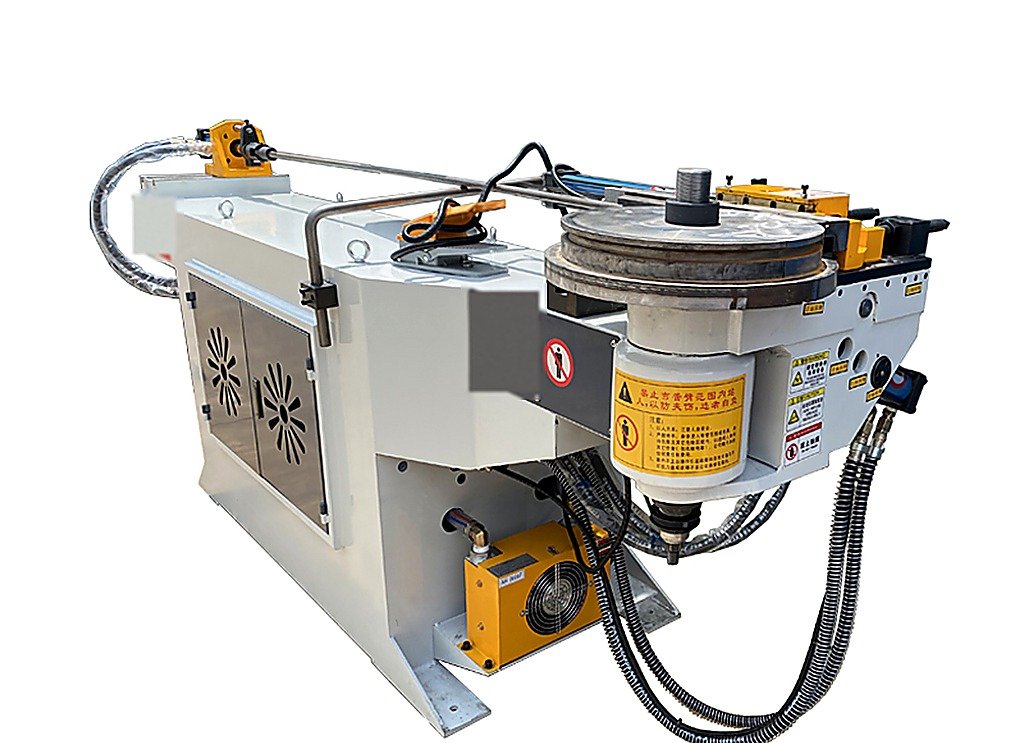
In a tube fabrication shop, turning a straight length of steel into a finished bent part used to mean marking, clamping, setting the die by hand, trial bending, then correcting what the trial bend got wrong. Quality rested almost entirely on the operator’s feel. Those operators are becoming harder to find, while orders are becoming more fragmented: one production plan may carry three tube diameters, five bend radii and eight small batches side by side. That is why more and more lines now hand this step to a fully automatic steel tube bending machine — feeding, rotation, bending, mandrel retraction and unloading run as one continuous program, cycle times are compressed to seconds per part, and batch-to-batch angular consistency no longer depends on who happens to be on shift.
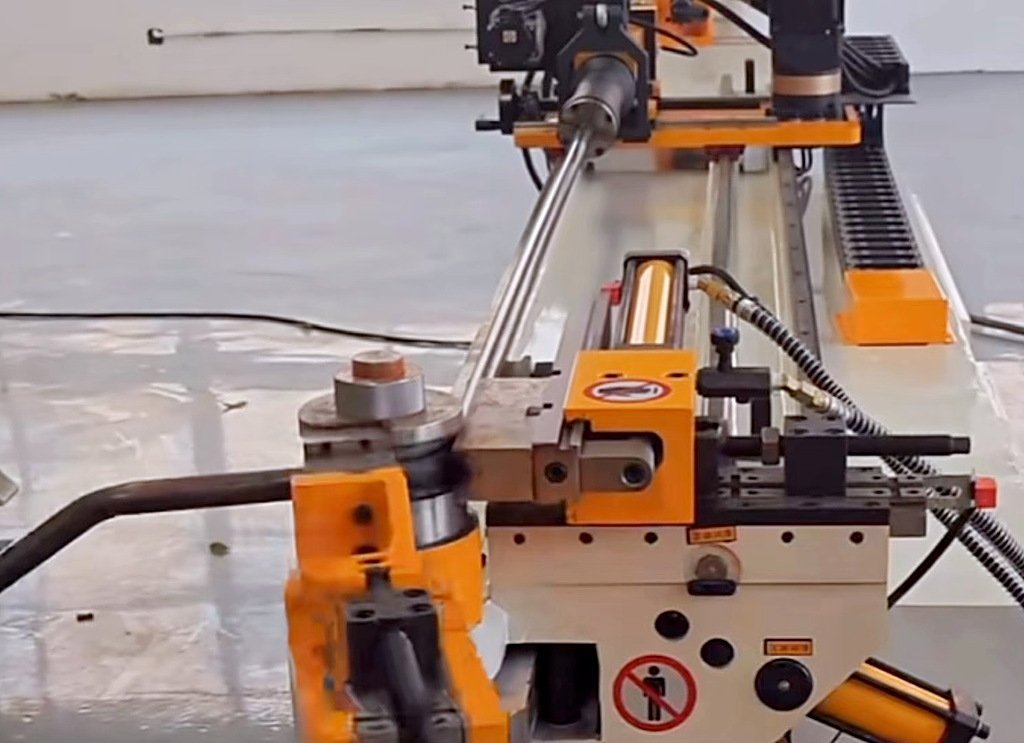
This substitution is not simply a machine replacing a person. What actually changes is the cost structure of tube forming: scrap rate, changeover time, dependence on skilled labor and material utilization — four hidden costs that were previously hard to quantify — are suddenly comparable on the same sheet of paper.
What “Fully Automatic” Actually Automates
Buyers often treat “CNC” and “fully automatic” as the same thing. The difference sits in the loading and material-handling segment.
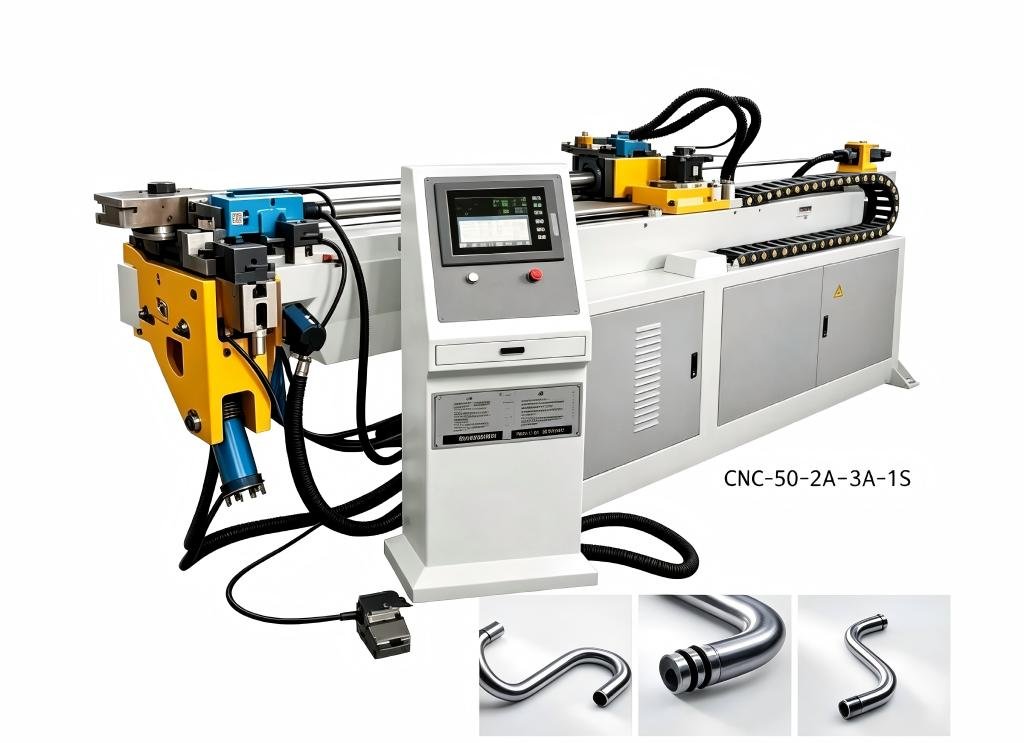
CNC solves the question of bending accurately. Program-controlled servo or hydraulic actuators form the tube segment by segment at a defined feed length, rotation and bend angle, removing manual die alignment and trial bends from the process. On mainstream CNC machines, bend angle deviation is typically held within ±0.5°, and bend radius consistency within ±1 mm — enough for the vast majority of structural and visible parts.
Fully automatic solves the question of not needing someone standing there. The machine has to know when to pick up the next tube. The approaches vary, but the mainstream idea is to connect an automatic loading rack to the infeed side of the bender: the bottom of the rack carries an opening slightly larger than the tube diameter, the upper surface is inclined so tubes roll down by gravity to a pick-up position, and a screw, push plate and stop plate feed a single tube into the clamping center. When the bend is finished, the part is ejected and the cycle repeats. The mechanism looks plain, but it is the precondition for one operator to run three to five machines.
One level above that sits the flexible cell: robotic loading and unloading combined with in-line inspection. A robot shuttles between the bin and the clamping center, aided by vision or laser positioning, closing the loop from raw tube to finished part. The value here is in cycle time — compared with manual handling, robotics can cut auxiliary time by more than half, so a far larger share of the shift is spent actually bending, and round-the-clock operation starts to make economic sense.
A Generation Change in Drive Technology
Conventional hydraulic benders earn their place with torque. On large-diameter, thick-wall tube they remain hard to replace: ample bending force, good overload tolerance, relatively controlled cost. Their weaknesses are equally clear. Rising oil temperature shifts flow characteristics, so angles begin to drift after hours of continuous work. Valves, hoses and seals are consumables, so maintenance windows come around often. And because energy passes through several conversion stages, the machine keeps drawing power while idling.
The new generation of fully automatic machines moves to direct-drive servo motors with high-resolution encoder feedback. The benefits come in three layers.
The first is accuracy and repeatability. Angular repeatability commonly reaches ±0.05° to ±0.1°, feeding accuracy lands in the ±0.05 mm range, and premium models go tighter still. On parts with multiple or consecutive bends, the cumulative effect of per-segment error drops sharply, and assembly no longer requires reworking every piece.
The second is energy and cleanliness. Servo drives deliver power on demand, with no throttling losses and no overflow losses, cutting energy consumption by thirty to fifty percent against a conventional hydraulic system. Removing hydraulic oil also removes a contamination source — a meaningful advantage for cleanrooms and for tube assemblies destined for food or medical environments.
The third is maintainability. Valve blocks, hoses and reservoirs disappear from the machine, the consumable count falls, mean time between failures extends, and daily care retreats to lightweight routines such as lubrication, chip removal and zero calibration. For plants chasing overall equipment effectiveness, reduced downtime is usually worth more than the electricity saved.
One Setup, Finished Geometry: Multi-Axis Linkage and Springback Compensation
The real threshold for a modern machine is not how fast a single axis travels, but whether the axes can cooperate like a hand.
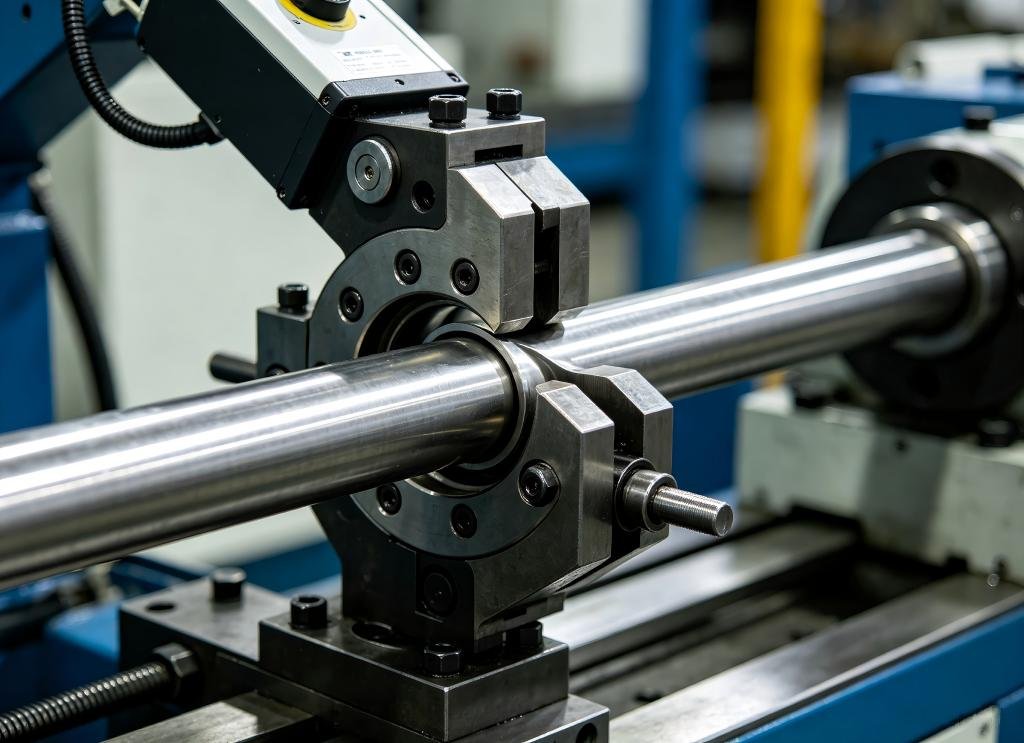
The feed axis handles length, the rotation axis handles spatial orientation, the bend axis handles angle, and the mandrel axis handles mandrel advance and retraction. With four axes linked, planar bends, S-bends, serpentine bends and three-dimensional bends are completed in one clamping cycle. The significance of this is often underestimated: every re-clamp avoided is one less positioning error, and one less chance of marking the surface. On stainless tube, electrophoretic parts or coated tube, a clamp mark is scrap.
The other half of complex bending lives in tooling and process parameters. When thin-wall tube is bent to a tight radius, three problems are unavoidable: wall thinning on the outside, wrinkling on the inside, and ovalization of the section. The answer is a combination — a mandrel that supports the inner wall against collapse, a wiper die that holds the inner wrinkle zone, and a booster that pushes the tube tail forward during the bend to compensate material flow. With parameters properly set, even a bend radius below twice the tube diameter keeps a full arc and a clean surface. That is the entry ticket for high-demand work such as automotive fluid lines, air-conditioning piping and seat frames.
Springback is the other quantity that has to be calculated out rather than chased. Steel tube always springs back after bending, and the amount depends on material batch, wall thickness tolerance and bend radius. Mature machines write compensation into the program: a compensation table keyed to material grade and measured data, so the controller over-bends by a calculated angle on every cycle. More advanced setups add laser measurement and real-time angle feedback — measure immediately after the bend, correct immediately on deviation — so the first part is close to conforming instead of relying on repeated trial bends to feel out the parameters.
Consistency Is the Real Capacity
Many plants calculate capacity from cycle time alone and overlook yield and changeover. In practice, the return on a fully automatic machine comes from three invisible gains.
First, fewer rejects. Manual bending produces a wide error distribution, which assembly lines compensate for by selectively fitting parts. Program-driven production produces a narrow distribution, so welding fixtures and gauges can be designed directly to nominal dimensions. Once tolerances tighten along the whole chain, welding distortion, assembly gaps and post-process straightening all shrink together.
Second, shorter changeover. With high-mix, low-volume order structures, how fast tooling changes determines utilization. Quick-change die structures, pre-mounted die plates, program libraries and recipe management can pull changeover from one or two hours down to under ten minutes. Only then can a single machine run a dozen specifications in a day and still be called flexible.
Third, better material utilization. Precise feed-length control minimizes head and tail allowance, and nesting plus programmed cut-off makes the number of parts per six-meter length predictable. On stainless, copper or titanium, this single item often exceeds the combined savings on power and labor.
The Application Boundary Keeps Moving Outward
Automotive remains the largest application area: exhaust systems, fuel and brake lines, seat frames and chassis structural tube all depend heavily on bending automation, with demanding consistency requirements. Electrification adds new volume — battery-pack cooling circuits and structural parts for drive units and charging infrastructure, with wide diameter spans, complex geometry and fast-ramping batch sizes.
Aerospace and rail transit demand precision bending of titanium and high-strength alloy tube, usually in small batches with many variants and full traceability, which makes the process database and machining records as important as the machine itself. Furniture, fitness equipment, sanitary ware, retail shelving, strollers and tent frames sit at the other extreme: many variants, small batches, high cosmetic requirements, where quick die changes, stable appearance and a low operating threshold matter most. Agricultural machinery, boilers, heat exchangers and marine piping care more about the ability envelope — thick wall, large radius, long lengths.
Material coverage keeps widening too. Carbon steel, stainless steel, copper, aluminum, titanium and high-strength steel all run on the same platform once dies are changed and parameters adjusted, covering diameters from a few millimeters to well over one hundred. Square, rectangular and special sections are handled with the corresponding tooling, which makes the practical working range of one machine considerably wider than its nominal specification.
What to Evaluate Before Buying
Price alone is a poor guide. Equipment value has to be accounted for across the whole service life, and a few dimensions deserve priority.
Structure and rigidity. Whether the frame has been stress-relieved and whether the guides and bed are stiff enough decide whether accuracy still holds after long continuous operation. Thermal stability usually only shows up after a full shift.
Core components and process understanding. The selection of servo systems, reducers, guides and controllers drives failure rates and spare-part availability. More decisive still is whether the supplier can look at a drawing and say immediately whether the part is hard to bend, how the tooling should be cut and how the operations should be sequenced. Process capability lowers trial-and-error cost more than any specification sheet.
Completeness of the automation package. Loading racks, robots, inspection, deburring and cleaning need to assemble into a line that follows production rhythm, rather than arriving as a set of standalone machines that cannot talk to each other.
Service and spares. The bender itself is not a consumable; the tooling is. Die lead time, regrinding support and programming response determine the machine’s real availability over a decade.
Using It Well: A Few Non-Negotiable Rules
Daily care has only two centers of gravity: lubrication and tooling. Guides, screws and racks need grease on schedule — running dry causes irreversible wear. Once the radius of a bend die wears past tolerance, the outside of the part picks up faceting and angles start to drift; the die has to be replaced rather than pushed through another batch.
Never bend outside specification. A radius smaller than rated, a wall thicker than the limit, a diameter beyond the die range — in the short term it appears to work, but over time you are trading machine life for output. Calibrating the feed system and angle sensors periodically is the basic discipline for long-term accuracy; after a season change or a large ambient temperature swing, running a calibration part once saves a whole batch of rework later.
On safety, high-speed feeding and rotation mechanisms require light curtains or interlocked guards. During setup, the tail of the tube swings through a wide arc as the rotation axis turns, and that sector belongs inside the marked exclusion zone. The mandrel retracts with an impact, so the operator position should never sit on the axis line. These are not formalities — they are the most common injury points on this class of equipment.
Conclusion
From feel to program, from standalone machines to unmanned cells built from loading racks, robots and data systems, the fully automatic steel tube bending machine is turning tube forming into something controllable, traceable and repeatable. What it delivers is not just a few seconds off the cycle; it is the first time that high variety, small batch size and high consistency — three terms that used to contradict each other — can appear on the same order.
Servo technology, robotic integration, simulation and data acquisition all keep advancing, and the next round of competition will not stay on the question of whose machine bends faster. It will move to who can package process know-how into the equipment and turn stability into a standard product. For manufacturers, the earlier this operation is decoupled from individual experience, the earlier the certainty shows up in cost and delivery.