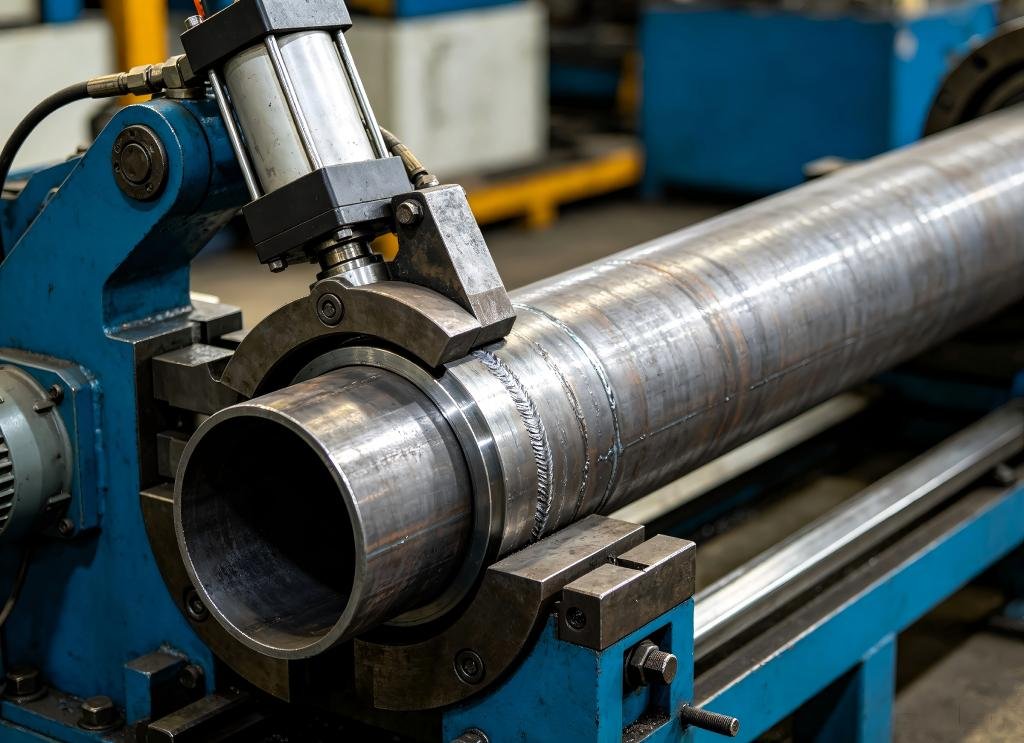
How to Choose the Right Tube Bending Machine: A Practical Buyer’s Guide
News 2026-09-10
- Two tube bending machines may carry the same “maximum diameter” label and still produce very different results on the same part. One may bend a simple 50 mm handrail without difficulty but struggle with a thin-wall exhaust tube containing six bends in three planes. The other may be unnecessarily expensive for a workshop that makes short batches of basic U-shaped frames.
- That is why the right way to choose a tube bending machine is to begin with the finished component—not the machine brochure. Before Jiuqiang recommends a configuration, the useful starting point is a drawing, the tube specification and a realistic production target. This practical buyer’s guide explains what those details mean and how they influence the machine, tooling and level of automation.
The short answer: start with your most difficult part
Do not size a new bender around the easiest or most common component alone. Identify the part with the largest diameter, the thickest or thinnest wall, the tightest radius, the greatest number of bends and the strictest appearance requirement. Sometimes these are different parts, so a supplier should review a small “worst-case” group rather than one sample.
A machine is suitable only when it can supply enough bending and clamping force, accept the required tooling and move the complete workpiece without collision. Its control system must also match the job. A single-plane furniture support and a three-dimensional automotive pipe may use the same tube diameter but require very different automation.
Prepare these eight items before asking for a quotation
| Information | Why it matters |
|---|---|
| Material and grade | Carbon steel, stainless steel, aluminum and copper have different strength, friction and springback behavior. |
| Outside diameter or profile size | Determines the basic machine and tool size. Include dimensions for square, rectangular or oval profiles. |
| Wall thickness | Affects bending force and the risk of wrinkles, flattening and outer-wall thinning. |
| Centerline radius (CLR) | A tight radius usually needs stronger support, more precise tooling and sometimes a mandrel and wiper die. |
| Bend angles and rotations | Show whether the part is two-dimensional or requires automatic rotation between bends. |
| Tube and finished-part length | Confirms feeding length, mandrel length, floor space and possible collision points. |
| Required output | Parts per shift, batch size and changeover frequency determine whether manual, NC or CNC handling makes sense. |
| Acceptance standard | Angle tolerance, ovality, wrinkles, surface marks and fixture fit must be agreed before the machine is built. |
A 2D drawing is enough for many simple parts. Send a 3D file when bends occur in different planes or when the finished component can interfere with the machine. Photos help explain the application, but they do not replace dimensions.
Choose the automation level that matches the work
Semi-automatic or hydraulic benders
These machines are often a sensible choice for simple bends, repair work, prototypes and small batches. The machine completes the bending stroke, while the operator may position, feed or rotate the tube manually. They cost less than a fully automatic CNC system and can be quick to set up for straightforward parts.
The limitation is repeatability between manual operations. If a part has several bends and rotations, small positioning errors accumulate. Labor also becomes a larger part of the unit cost as volume increases.
NC pipe bending machines
In the tube-bending market, “NC” normally refers to a machine that controls the bending angle and stores several bend programs but still relies on manual feeding or rotation. Naming varies between suppliers, so ask exactly which axes are powered and programmed. An NC machine can be an effective middle ground for exhaust parts, furniture frames and general fabrication when the geometry is mainly in one plane.
CNC tube bending machines
A CNC tube bender coordinates bending, feeding and rotation through a program. It is the usual choice for multi-bend parts, three-dimensional geometry and repeat orders where manual measurement would add too much variation. Program storage also makes it easier to return to a previous component after a product change.
CNC does not remove the need for good tooling or material control. It makes the movement repeatable; it cannot correct a worn clamp die, an incorrect mandrel position or a tube batch with unstable wall thickness.
Fully automatic production
Automatic loading, cutting, end forming or unloading can be added when volume supports the investment. This is most useful for stable products with long runs. For a factory making many small batches, fast changeover and accessible tooling may deliver a better return than maximum automation.
Match the bending process to the shape
Rotary draw bending is widely used when the part needs a defined radius and good dimensional repeatability. It can work with a mandrel and wiper die for thin walls or tighter radii. Roll bending is intended for large sweeping curves, rings and arches. Press or compression bending may be sufficient for some robust, simple parts where cross-section control is less demanding.
Do not ask a rotary draw machine to replace every other forming method. A large-radius architectural arch may be more practical on a roll bender, while a compact exhaust elbow generally needs rotary draw control. If one finished assembly includes both types of geometry, it may require two processes.
Tooling is part of the machine decision
The bend die establishes the radius. The clamp die holds the tube, and the pressure die supports it as the bend develops. Difficult parts may also need an internal mandrel to control collapse and a wiper die to prevent compression wrinkles near the tangent.
Each tube size and radius normally needs its own matched tooling. This cost should be included in the quotation. Ask what is supplied with the machine, what material and surface finish are used, and how future tool sets will be made. Polished stainless steel and decorative furniture tubes need clean, smooth contact surfaces. Rectangular or oval profiles need tools that also prevent twist.
Check capacity with more than diameter
A catalog capacity such as “76 mm” or “114 mm” is only a reference. Actual capacity changes with the material grade, wall thickness, radius and shape. A smaller thick-wall stainless tube at a tight radius may demand more from the machine than a larger thin-wall mild-steel tube at a generous radius.
Ask the supplier to confirm the proposed model against the drawing. For a difficult component, a sample-bending test is the best evidence. Agree in advance on what will be measured: final angle, straight lengths, rotation, ovality, visible wrinkles, thinning and surface quality.
Calculate output using good parts, not bending speed
Maximum bend speed is not the same as production capacity. A realistic cycle includes loading, clamping, feeding, rotation, bending, unloading and inspection. Changeovers and first-article approval also matter. The useful number is acceptable parts per shift.
Compare the complete cost: machine, tooling, operator time, scrap, maintenance, energy, floor space and the effect of inaccurate parts on welding and assembly. A lower-priced machine can become expensive if every component requires manual correction. Conversely, a high-axis CNC system is poor value if it spends most of the day producing one simple bend.
Questions worth asking a tube bender supplier
- Which axes are CNC-controlled, and which actions are manual?
- Has the model been checked against our hardest part drawing?
- Is mandrel bending included or optional?
- What tooling is included in the price?
- Can the part be trial-bent before final acceptance?
- How are programs backed up and restored?
- Which wear parts and recommended spares should be ordered?
- What installation, training and remote support are available?
- Which CE and quality documents are supplied for this model?
How Jiuqiang approaches machine selection
Jiuqiang supplies semi-automatic, hydraulic, NC, CNC and fully automatic tube bending solutions for carbon steel, stainless steel, aluminum, copper and other metal tubing. Applications include automotive and exhaust parts, furniture, bicycles, fitness equipment, shipbuilding and general fabrication. Depending on the project, the machine range can be evaluated for tube diameters up to 114 mm and wall thicknesses up to 10 mm; the drawing and material always determine the final recommendation.
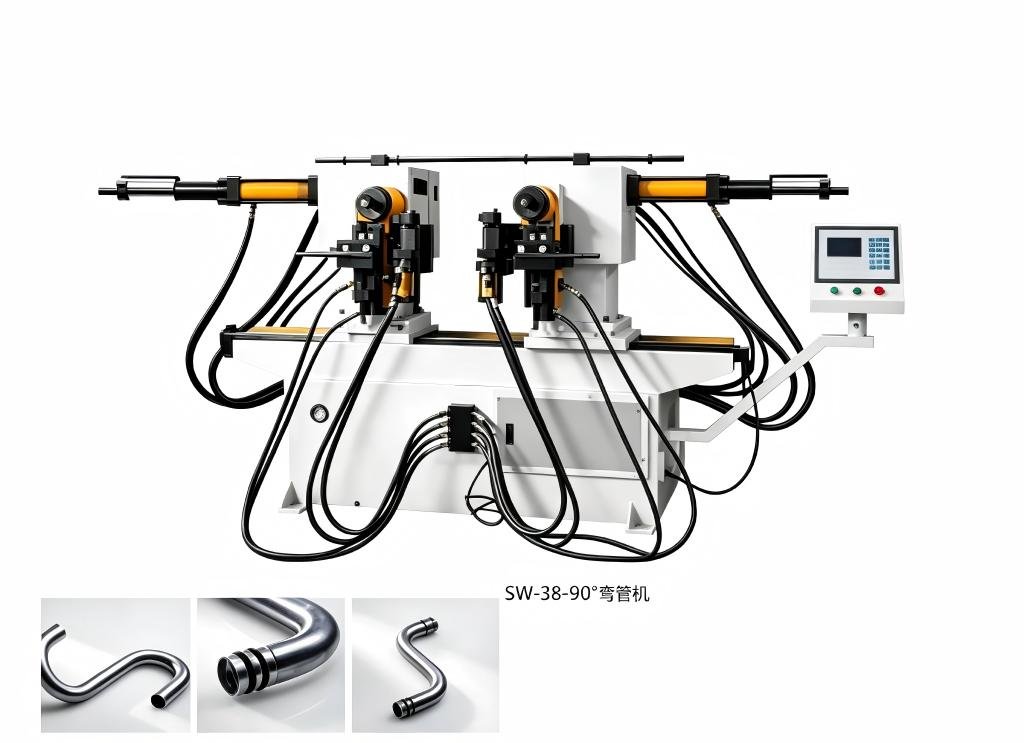
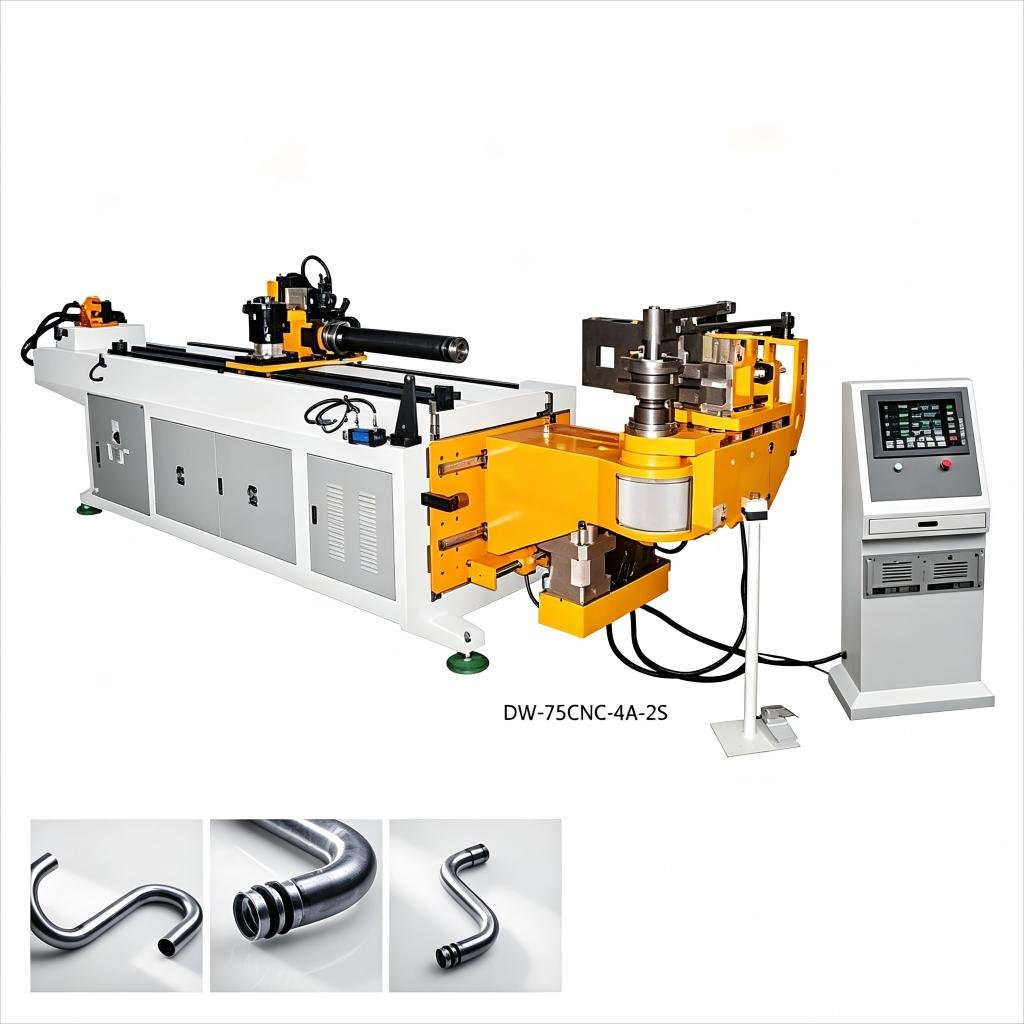
Buyers can compare a simple SW-38 hydraulic tube bender with a more automated DW-75CNC tube bending machine to see why the correct configuration depends on the work rather than one headline specification.
Jiuqiang equipment is manufactured under ISO-certified quality procedures and supplied with CE certification for international markets. Machines are exported to Mexico, Vietnam and other countries. For a useful proposal, send the hardest drawings, tube specifications and target output through the Jiuqiang contact page.
Frequently asked questions
What machine is best for a tube with several bends?
A CNC bender is normally the better option when the part contains several feed lengths and rotations. For a simple one-plane part, an NC or semi-automatic machine may be sufficient.
Does every thin-wall tube need a mandrel?
No. The need depends on diameter, wall thickness, radius, material and the acceptable ovality. A sample bend is more reliable than a general rule.
Can one machine bend stainless steel and aluminum?
Often yes, when both parts are within its capacity. They will need different programs, springback compensation, lubrication and possibly separate tooling to protect the surface.
What should I send Jiuqiang first?
Send a drawing, material grade, outside diameter, wall thickness, smallest radius, number of bends, finished-tube length and required parts per shift. That information is enough for an initial technical review.