Precision Tube Forming Solutions: Application of Automatic Tube Bending Machines in Automotive and Engineering Pipeline Projects
News 2026-10-28
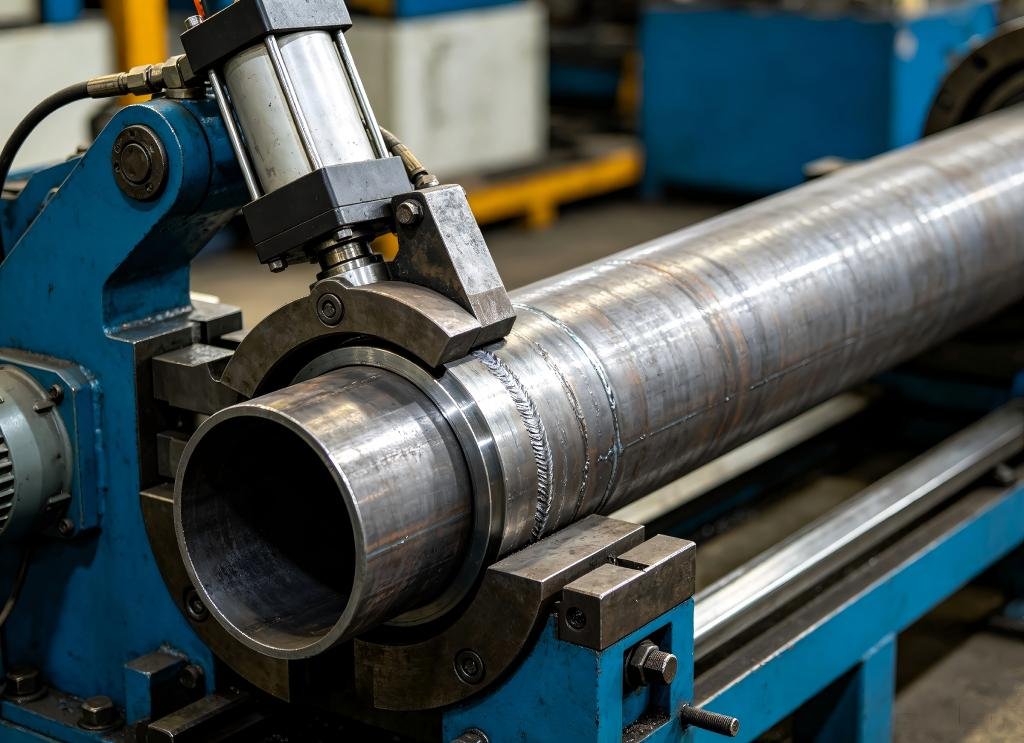
An automatic tube bending machine is a high-precision industrial equipment integrating servo drive, CNC programming and tube plastic forming technology. Boasting stable repeat positioning accuracy, flexible changeover capability and continuous processing performance, it has been widely adopted across industrial chains including automotive manufacturing, building MEP, aerospace and fluid engineering. Against the backdrop of global manufacturing transitioning toward lightweight design, digitalization and flexible batch production, pipeline systems, as fundamental components for medium conveyance, energy transmission and structural fabrication, are subject to increasingly stringent requirements for forming consistency, inner-wall finish and sealing reliability. The conventional manual tube bending process with simple tooling struggles to meet mass production demands for multi-specification, complex 3D spatial pipelines. Automatic tube bending solutions have therefore become the mainstream option for precision tube forming. This article focuses on its core application scenarios in the automotive industry, and further explores its adoption in building MEP pipeline fabrication, to analyze the process value, practical advantages and long-term technical evolution of this forming solution.
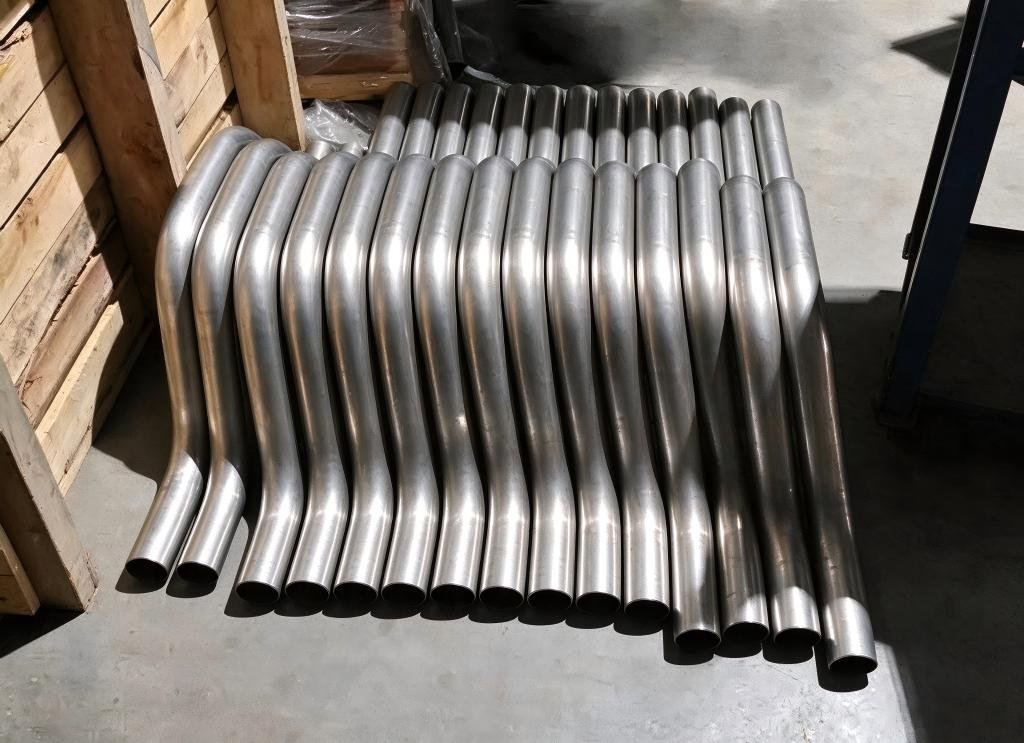
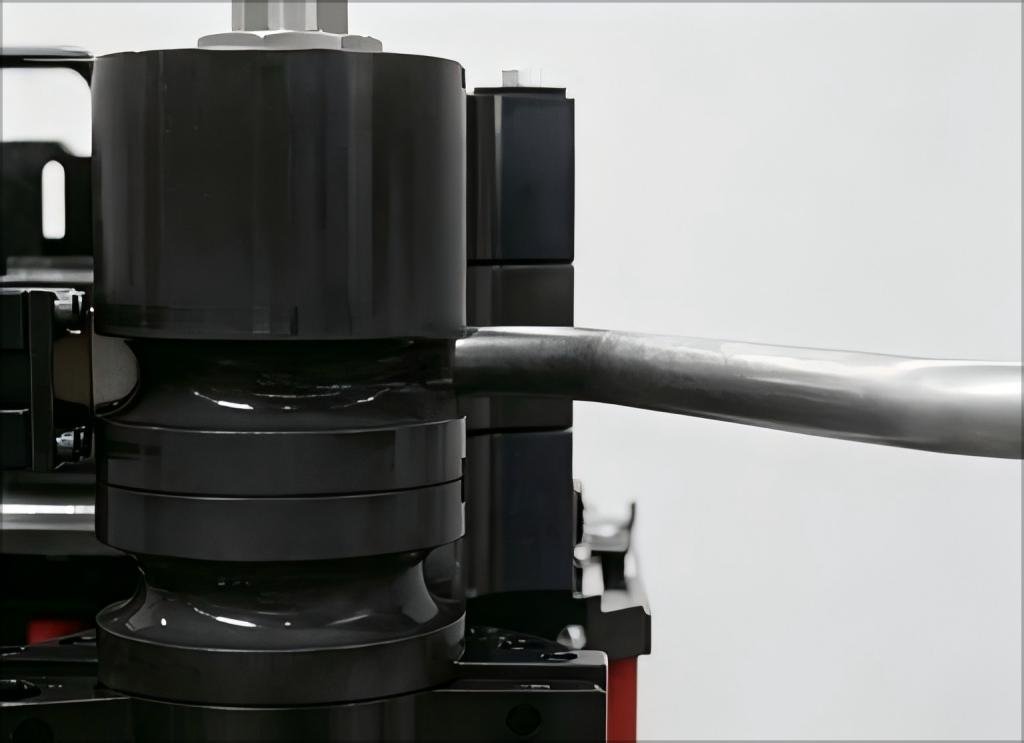
The automotive sector represents one of the most critical and demanding application fields for automatic tube bending machines. A vehicle contains a dense network of functional pipelines, covering exhaust systems, cooling circuits, brake lines, fuel delivery pipes, air-conditioning refrigerant lines and body structural tubular parts. The forming quality of every single tube directly determines vehicle operational stability, driving safety and durability. Traditional manual bending relies heavily on operator skill, frequently resulting in defects such as angular deviation, arc distortion, tube flattening and inner-wall wrinkling. Poor consistency among workpieces complicates subsequent assembly, and may cause risks including inadequate sealing contact and abnormal medium pressure drop. Driven by CNC programs for multi-axis synchronization, automatic tube bending machines support pre-import of 3D tube drawings, and precisely control feeding length, tube rotation posture, bending angle and bending radius to complete successive multi-segment bends in one cycle. The finished tubes feature smooth arcs and controllable roundness, ensuring unobstructed fluid flow inside pipelines, reducing turbulence and pressure loss, and laying a solid foundation for consistent vehicle performance.
The rapid advancement of new energy vehicles further highlights the value of precision tube bending and redefines the technical boundaries of tube processing. Unlike conventional fuel vehicles, new energy vehicles adopt more intricate layouts for thermal management systems, battery cooling circuits and high-voltage protective pipelines. A large share of these tubes are thin-walled aluminum alloy and precision stainless steel tubes, which must fit into confined spaces around battery packs and electronic control modules, generating massive demand for multi-layer spatial bends and tight bend-ratio forming. Such thin-walled alloy tubes exhibit prominent springback and are prone to collapse and inner-surface scratching during bending, which imposes strict requirements on springback compensation, mandrel matching and bending speed regulation. Automatic tube bending machines allow parametric storage of forming recipes for different materials, enabling fast switching between aluminum, stainless steel and mild steel processing to suit lightweight material systems. While maintaining forming precision, they minimize excessive wall thinning, balancing structural strength and weight reduction, and perfectly accommodate the development rhythm of compact thermal management pipelines for new energy models. In addition, the fabrication of roll cages for racing vehicles and chassis support structures also depends on this equipment to reliably bend high-strength tubes, ensuring uniform metallographic structure in bent zones and avoiding fracture hazards induced by stress concentration.
Automatic tube bending machines also deliver remarkable benefits in building MEP and engineering pipeline applications. Modern building MEP networks cover water supply, drainage, fire sprinkler, HVAC and ventilation heat exchange systems. Prefabricated pipeline assembly is gaining popularity, whereby most tubular components are prefabricated in workshops before delivery to construction sites. Compared with on-site manual hot bending, off-site automated prefabrication features traceability, standardized dimensions and high yield rates. Process parameters exported from BIM pipeline drawings can be loaded into the machine for uniform forming, with consistent bending angles and arc curvature. This effectively eliminates dimensional errors and rework caused by on-site fabrication, greatly lowers the risk of pipeline clash and improves MEP installation efficiency.
Beyond functional performance, exposed piping in commercial complexes, exhibition halls and premium public buildings also has strict aesthetic requirements. Automatic tube bending machines produce continuous, seamless arcs with smooth transitions and minimal surface scratches to satisfy architectural design expectations. Standardized forming also curbs tube material waste from rejected parts, cutting project costs at the prefabrication stage. For diverse materials including thick-walled fire steel tubes, stainless steel HVAC duct fittings and thin-walled copper water supply pipes, the machine can quickly swap dies and adjust clamping pressure. It adapts to mixed processing of multiple tube sizes and materials typical of construction projects, supporting both mass prefabrication and small-batch prototyping of custom bent parts.
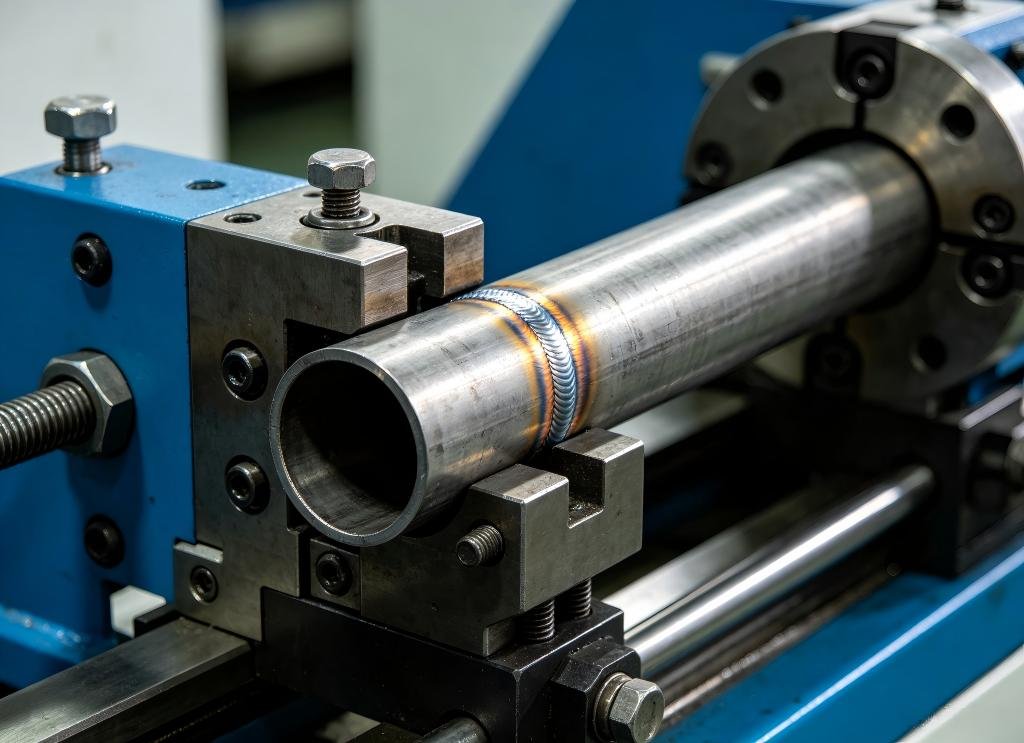
Apart from these two primary application sectors, the solution’s strengths also lie in production line flexibility and digital compatibility. A well-developed automatic tube bending workstation can be integrated with automatic loading, end-forming, in-line inspection and unloading sorting modules to build an integrated tube processing cell. It connects upstream and downstream processes such as cutting, chamfering and welding to realize full automation of tube fabrication. Saved program recipes for different tube models can be recalled with one click. When vehicle designs or engineering drawings are revised, lengthy re-commissioning is unnecessary, shortening lead time for new sample development. This makes it highly suitable for high-mix, low-volume production orders. Angular readings and forming parameters captured during processing can be logged and synchronized with factory digital management systems, enabling full process traceability for every batch of tubes to satisfy IATF quality specifications for automotive manufacturing and acceptance criteria for engineering pipelines.
Looking ahead, automatic tube bending technology will keep evolving alongside smart manufacturing. Under the Industry 4.0 framework, control systems are being upgraded with forming simulation, real-time monitoring and adaptive adjustment capabilities: simulation is run prior to trial bending to predict interference, wrinkling and collapse risks; springback compensation values are automatically updated using data from in-process inspection to reduce repeated manual calibration. Green and low-carbon design has also become a key direction for equipment iteration. New-generation drive systems optimize power consumption profiles to reduce idle power draw, while improved lubrication and cooling systems cut pollutant emissions, aligning with sustainable manufacturing targets in automotive and construction industries. Meanwhile, emerging processes including mandrel-free cold bending, synchronized left-and-right compound bending and continuous variable-radius bending keep expanding the technical limits and unlocking greater freedom for pipeline design.
In essence, the widespread adoption of automatic tube bending machines for automotive and building MEP pipelines marks an industrial upgrade, where precision forming replaces rough manual fabrication. It is not merely a boost to processing speed; through stable dimensional consistency, controllable forming defects and digital traceability, it improves the safety, sealing performance and assembly compatibility of pipeline systems from the source. As downstream product iteration accelerates and demand rises for new tube materials and complex spatial piping, automatic tube bending solutions will remain core equipment for tube manufacturing, supporting product innovation and quality improvement across automotive, construction and other high-end manufacturing industries.