What Factors Affect the Accuracy of Automatic Pipe Bending Machines
News 2026-08-04
Pipe bending machines on the market vary greatly in price, mainly due to different equipment types. The industry’s mainstream models are divided into three categories: automatic pipe bending machines, CNC pipe bending machines, and hydraulic pipe bending machines. Different driving methods, structural configurations and technical performance lead to huge differences in machining accuracy and overall cost, forming a clear price gradient.
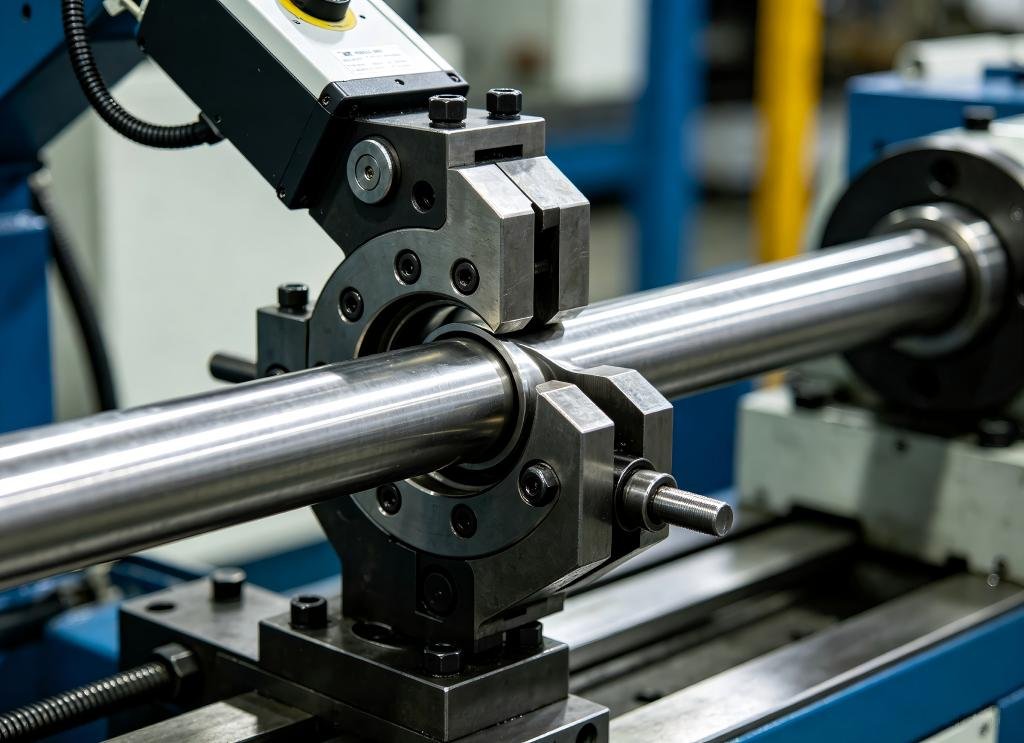
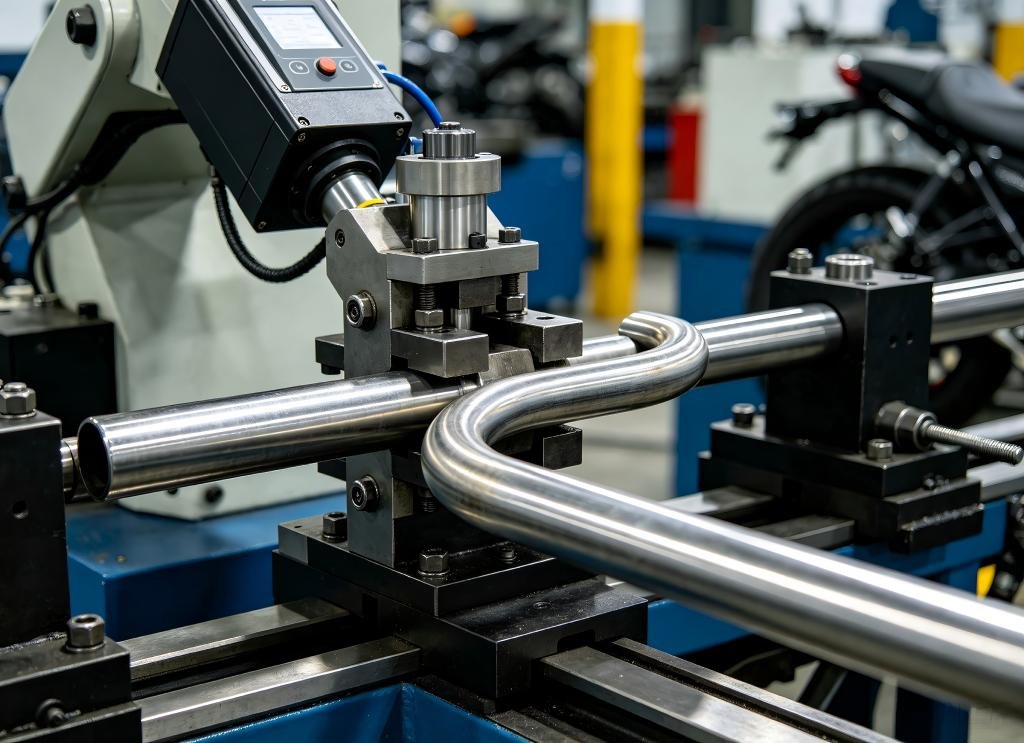
Different from traditional hydraulic pipe bending machines that adopt split hydraulic drive to complete clamping, unclamping, bending, resetting, auxiliary pushing and core pulling separately, Jiuqiang automatic pipe bending machines adopt a full-electric driving mode. Equipped with high-precision motors, reducers and gear chain transmission systems, our equipment delivers more precise power output and more stable operation. Although fully electric automatic pipe benders own higher accuracy and better stability than traditional models, their final bending precision is still affected by multiple working factors. This article mainly analyzes the core factors that influence the machining accuracy of automatic pipe bending machines.
- Pipe Material and Surface Condition
The wall thickness, material hardness and surface roughness of pipes are basic factors affecting bending accuracy. Pipes with uneven hardness or inconsistent wall thickness will bear unbalanced force during bending, resulting in inconsistent springback, angle deviation and tube deformation. Rough pipe surfaces with oxide scales, impurities or defects will reduce the fitting degree between the mold and the pipe, causing force deviation and poor finished quality.
Jiuqiang pipe bending equipment adapts to various pipe materials. With optimized pressure control and structural design, it effectively compensates for material errors and ensures regular forming and stable precision even when processing common industrial pipes. - Equipment Power and Operating Mode
The rated power, transmission configuration and CNC operating mode directly determine the machine’s load capacity and forming stability. Higher power provides sufficient and smoother power output, which is suitable for bending thick-walled and large-size pipes and avoids insufficient power caused bending defects and angle errors.
Jiuqiang automatic pipe bending machines are equipped with upgraded digital control systems and matched intelligent program parameters. The adaptive power output mode perfectly fits different pipe processing requirements, realizing high-precision and consistent batch production and greatly improving product qualification rate. - Mold Positioning and Focus Alignment Accuracy
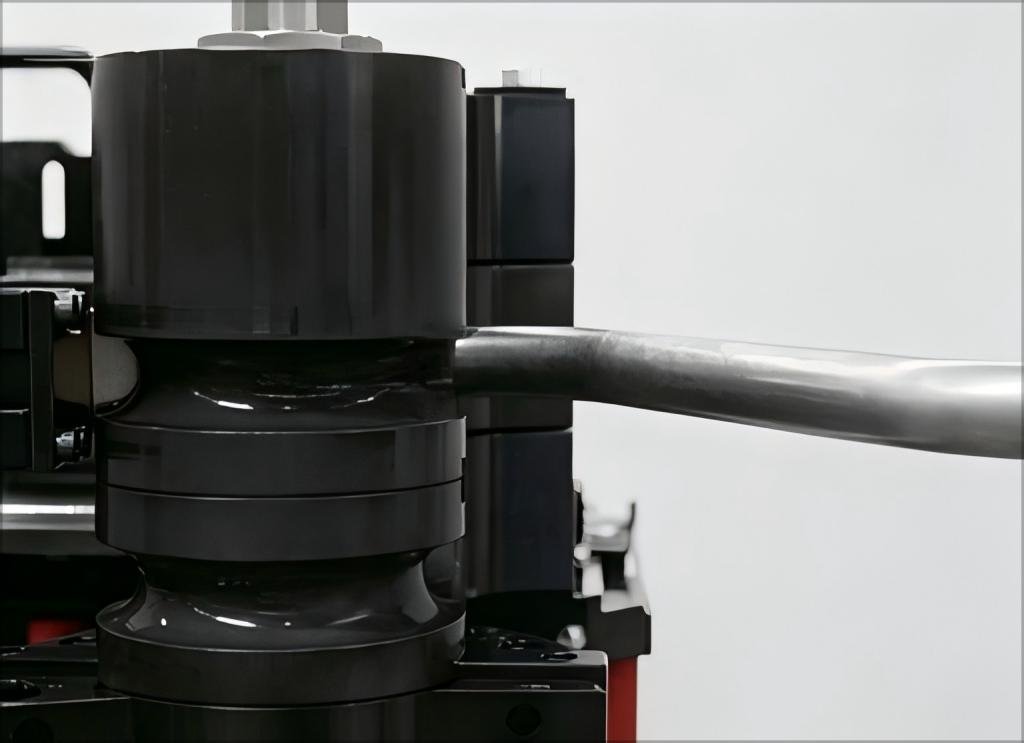
The mold is the core component for pipe forming. The positioning accuracy and focus alignment of the mold are key to guaranteeing bending quality. Unmatched mold specifications, loose installation or offset alignment will directly cause angle errors, arc deformation and pipe displacement.
Supported by standardized mold matching and high-precision calibration technology, Jiuqiang pipe bending machines realize accurate centering and firm installation of molds. The precise positioning system effectively eliminates assembly errors and ensures standard bending angles, arcs and overall dimensions for high-precision pipe processing. - Bending Processing Speed
The bending speed must match the pipe material, wall thickness and bending radius. Excessively fast speed will cause instantaneous deformation, irregular arcs, angle over-tolerance and tube wall collapse; overly slow speed will increase pipe springback, reduce efficiency and cause local deformation.
Jiuqiang intelligent control system automatically matches the optimal bending speed according to different working conditions, balancing high machining accuracy, smooth forming appearance and high production efficiency. - Auxiliary Air Pressure and Process Configuration
The pressure, type and purity of auxiliary gas directly affect the finish and precision of bent pipes. Sufficient and high-purity auxiliary gas can effectively remove impurities and oxide layers during processing, ensuring smooth and burr-free bending surfaces. Different gases have unique effects and costs on processing clearance and forming quality.
Jiuqiang pipe bending machines support flexible adjustment of air pressure and diversified gas matching solutions. The stable auxiliary process effectively reduces bending flaws and significantly improves the regularity and precision stability of pipe workpieces.
In conclusion, the accuracy of automatic pipe bending machines is determined by materials, equipment performance and process parameters. Relying on optimized transmission structure, upgraded CNC precision control system and stable power output, Jiuqiang automatic pipe bending machines greatly offset various working condition errors, realizing high-precision, high-stability and high-consistency batch pipe bending production.