A New Paradigm in Tube Forming: Non-Standard Adaptation, Technical Architecture and High-End Manufacturing Value of Automatic Tube Bending Machines
News 2026-10-26
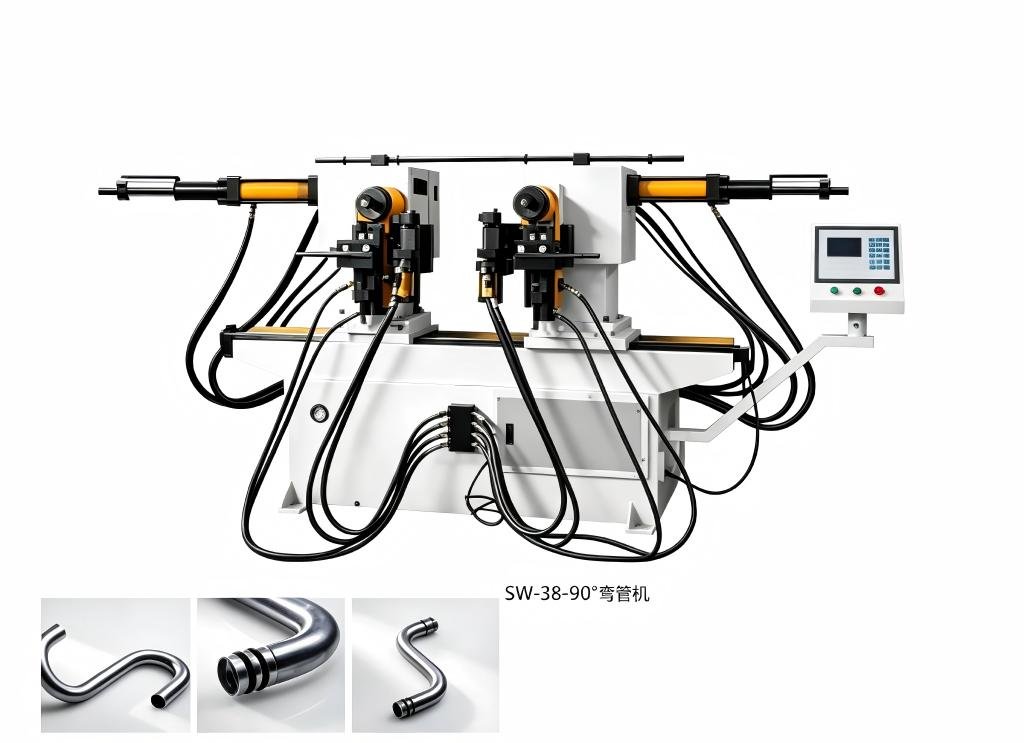
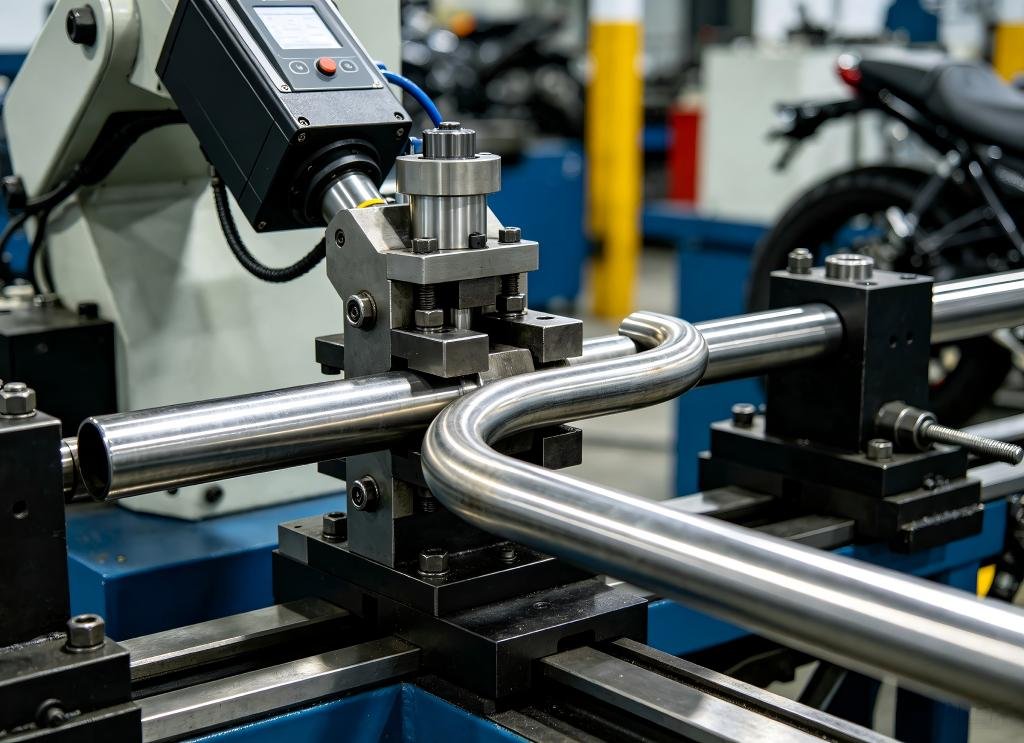
Within the modern metal tube processing industrial chain, bend forming serves as a core process connecting raw tubular materials and finished structural components. As global manufacturing shifts toward precision, digitalization, and flexible production for small-batch, high-variety orders, the traditional tube bending method relying on manual operation with simple tooling is increasingly unable to meet stringent quality control and production cycle requirements. Manual bending heavily depends on the operator’s experience, resulting in low productivity and rising labor costs. It is difficult to maintain consistent bending angles and arc profiles for finished tubes. Especially when processing thin-walled stainless steel and high-hardness alloy tubes, forming defects such as wrinkling, cross-section flattening, outer surface scratches and excessive springback frequently occur. Quality fluctuates between batches with a high scrap rate, which has become a bottleneck for many manufacturers aiming to improve quality and reduce costs. Featuring CNC programming and servo-axis linkage control, automatic tube bending machines realize closed-loop automated processing including clamping, feeding, rotation, bending and mandrel retraction. They have become indispensable core forming equipment across sectors such as fluid pipelines, automotive components, new energy supporting parts, HVAC and environmental protection, medical devices, light industry and furniture.
The underlying logic of non-standard process customization follows the matching principle of “machine tailored to workpiece”. Tubes for different applications vary greatly in material, tube diameter, wall thickness ratio, minimum bending radius, spatial bending geometry and production cycle. Standard machines are developed for general working conditions and have inherent limitations when handling offset bends, multi-layer 3D spatial bends, continuous multi-radius compound bends, or special alloy tubes with prominent springback characteristics. Custom development is not simply hardware modification; it is a complete process conversion project: translating customers’ 3D tube drawings and sample forming requirements into feasible equipment parameters, die schemes, motion programs and springback compensation strategies. Many buyers hold a misunderstanding that customization means adding unlimited functions. A mature process review prioritizes simplification: it first verifies whether existing standard dies and base machines can meet processing requirements through tooling replacement to avoid unnecessary modification costs. Special adaptation of machine structure, drive units and control systems will only be initiated for challenging scenarios such as complex spatial pipelines, ultra-small bend-radius ratios and wrinkle-free forming of thin-walled tubes.
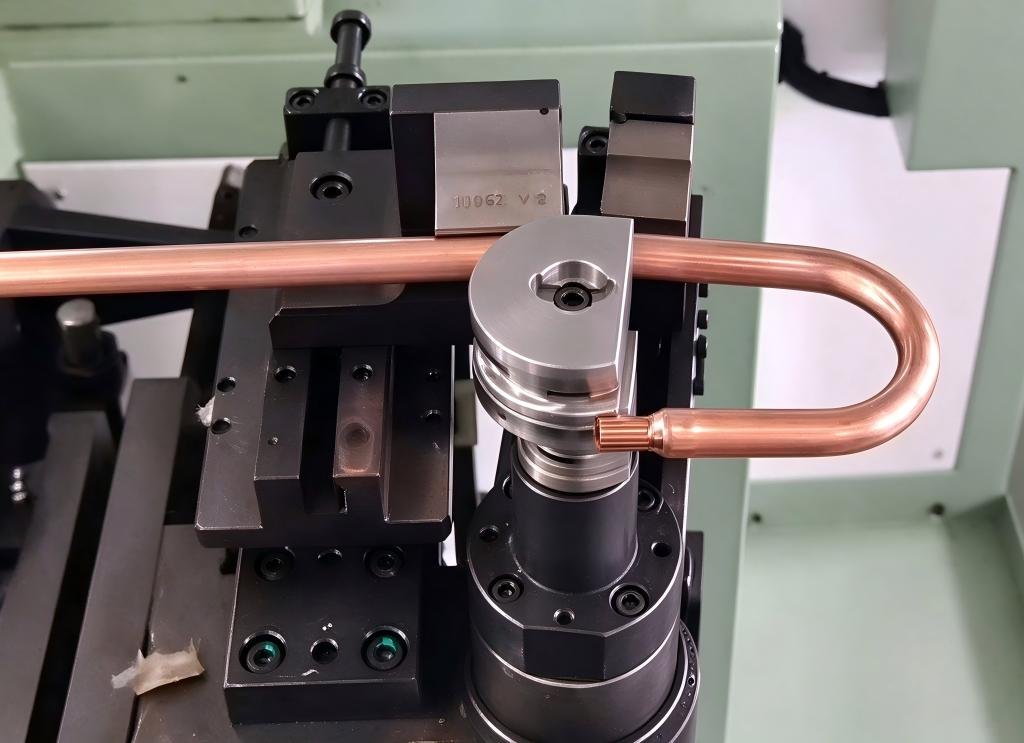
Consistent forming performance of a high-performance automatic tube bending machine is built on three coordinated technical systems. First is the mechanical structure design. A rigid heavy-duty bed, high-torque bending spindle and adaptive clamping mechanism form the equipment foundation to resist vibration from high-speed reciprocating operation and maintain stable reference dimensions over long service life — this is the physical basis for repeatable angle accuracy. Second is the selection of drive systems, mainly divided into full-electric servo drive and hydraulic-servo hybrid drive. The full-electric servo solution delivers smooth response, superior positioning accuracy and low noise, ideal for high-precision, small-diameter and high-frequency precision tube parts. Hydraulic drive provides high torque and heavy load capacity, suited for large-diameter, thick-walled carbon steel and heavy-duty forming applications. The shared goal of both solutions is synchronous control of bending speed, feeding length and tube rotation angle to prevent tube instability and wrinkling caused by abrupt speed changes. Third is the open CNC control system, which marks the performance gap between premium models. Advanced control systems integrate built-in tube springback compensation models with a user-friendly parameter interface. Process engineers can input and iterate compensation values based on actual forming test results for different materials and wall thicknesses. This function is decisive for improving yield when working with stainless steel, titanium alloy and other materials with significant springback and high risk of thin-wall collapse. High-end systems also support 3D drawing import and bending simulation to predict interference risks before trial bending, greatly shortening sampling cycles.
During preliminary technical communication and solution evaluation, tube material properties and target production cycle are two core input conditions. A material’s yield strength, elongation and work-hardening characteristics directly determine spindle torque, clamping pressure, die material and whether auxiliary accessories such as mandrels, anti-wrinkle dies and clamping liners are required. For thin-walled tube processing, the mandrel design (single-ball or multi-ball flexible mandrel) is critical to suppress tube wall collapse. For high-hardness alloy tubes, wear-resistant, highly polished dies are adopted to avoid surface scratches and satisfy appearance requirements for subsequent sealing, polishing and coating processes. The production cycle defines the level of automated expansion: basic units only perform automatic bending, while mass-production lines can be integrated with automatic loading racks, tube storage mechanisms, robotic handling, finished part sorting and in-line inspection modules to form an all-in-one bending workstation. It connects upstream and downstream processes including cutting, end forming and welding to achieve full-process automation of tube fabrication. Modular design is the mainstream development approach at present: a standardized base machine paired with quickly interchangeable process modules satisfies personalized forming demands while shortening delivery lead time and reducing spare part maintenance costs in the long run.
Quality assurance after equipment delivery relies on end-to-end manufacturing control. Machine beds and spindle boxes are made of premium castings and thick steel plates with stress-relief aging treatment to eliminate internal stress and prevent dimensional drift under long-term load. Core transmission components including spindles, guide rails, ball screws and servo motors are precision-machined with tight assembly tolerances. After assembly, the machine must undergo continuous no-load operation tests, standard sample bending verification and multi-batch repeatability accuracy inspection. Indicators including angle tolerance, roundness and wall thinning rate are checked item by item to confirm compliance with acceptance criteria. When evaluating proposals, buyers should look beyond nominal parameters and focus on the supplier’s process expertise, simulation capacity, sample testing capability, clear after-sales response mechanism and spare part lead time. This avoids situations where process commissioning support and fault repair are unavailable after delivery.
Rational maintenance is essential to sustain the performance and service life of automatic tube bending machines. Daily maintenance mainly covers lubrication, hydraulic/servo fluid management and periodic replacement of wearing parts. The lubrication scheme for mandrels, anti-wrinkle dies, clamping dies and guide dies directly affects the surface quality of bent tubes; lubricant type and refilling frequency must match the tube material. For hydraulic machines, the cleanliness and temperature of hydraulic oil need continuous monitoring. Contaminated or overheated oil causes jerky movement and unstable pressure, resulting in mass defective products. The technical manual supplied with the machine specifies replacement cycles for all consumable parts. Operators should receive systematic training beyond basic programming, mastering angle calibration, origin reset, emergency stop troubleshooting and interference alarm handling. Much unplanned downtime on production floors stems from operators who only know how to run saved programs without basic fault diagnosis and calibration skills.
Upgrades in downstream application markets in turn drive continuous innovation in bending forming technology. Early tube bending equipment mostly served low-tolerance scenarios such as furniture frames, fitness equipment and general fluid pipelines. Emerging sectors including new energy vehicle thermal management pipelines, battery tray support tubes, aerospace hydraulic lines and minimally invasive medical structural components impose strict requirements on spatial geometric tolerance, inner wall finish, pressure tightness and consistency of bent tubes. Market demands push control systems to evolve, adding data acquisition, production traceability, condition monitoring and remote debugging interfaces compatible with factory MES digital management. Processing parameters and forming data of every batch can be stored and traced to meet quality audit standards for high-end industries. Meanwhile, new processes such as mandrel-free cold bending, lightweight forming and synchronous left-right bending continue to expand the process boundaries of automatic tube bending machines.
In summary, selecting a suitable automatic tube bending solution essentially means achieving precise matching among hardware, control algorithms, forming processes and product requirements. It tests the solution provider’s long-term technical know-how of metal plastic forming, material springback rules and die mechanics. Meanwhile, manufacturers need to clearly define drawing standards, yield targets, production capacity plans and long-term expansion demands. With sufficient preliminary process review, simulation verification and sample bending trials by both parties, together with objective, quantifiable acceptance criteria, a stable, efficient forming machine matching production rhythm can be delivered. This transforms tube bending from a production bottleneck into a core competitiveness for productivity and quality improvement.