Automatic Fence Bending Machine: High-Efficiency CNC Tube Forming for Guardrail and Fencing Production
News 2026-11-04
As infrastructure renewal, urban streetscape upgrading, residential perimeter management, and agricultural livestock and solar mounting projects continue to expand, market demand for metal guardrails and fencing products keeps growing steadily. Unlike the standardized, low-margin order structures of the past, downstream customers now place far stricter requirements on the arc geometry, surface quality, batch consistency and delivery cycles of fencing products. Traditional fence tube processing that relies on manual layout, single-pass bending and hand straightening increasingly exposes problems such as low efficiency, high scrap rates and inconsistent arc profiles — especially in large-radius bending, mixed-specification production and thin-wall galvanized tube forming. Against this backdrop, the automatic fence bending machine, as a high-efficiency flexible tube forming solution, is being added to the core equipment upgrade lists of more and more tube fabrication workshops.
Why Fence Tube Bending Is Difficult
From a process standpoint, fence tube components differ sharply from conventional bent parts such as automotive lines or furniture frames. First, the arc span is large: a single horizontal rail for a municipal guardrail often needs continuous wave-shaped or arch-shaped bends over several meters, and every transition between arc segments must remain smooth — any local sharp point becomes magnified after powder coating or spray painting. Second, specification changes are frequent: different projects combine different tube diameters, wall thicknesses, bending radii and arch heights, and a single workshop may need to handle four or five specification sets within one day, with repeated die and parameter adjustments consuming valuable machine time. Third, the material is sensitive: fencing relies heavily on hot-dip galvanized tubes and zinc-steel composite tubes, which are prone to wrinkling, cross-section ovalization, coating flaking and surface scratching during bending; once scrapped, the processor bears both the material cost and the surface treatment cost. Finally, batch consistency matters: guardrails are typical batch-delivery products, and the post spacing and arc profiles of one project must match closely, otherwise on-site installation suffers from misaligned holes and uneven joints.
The Technical Makeup of an Automatic Fence Bending Machine
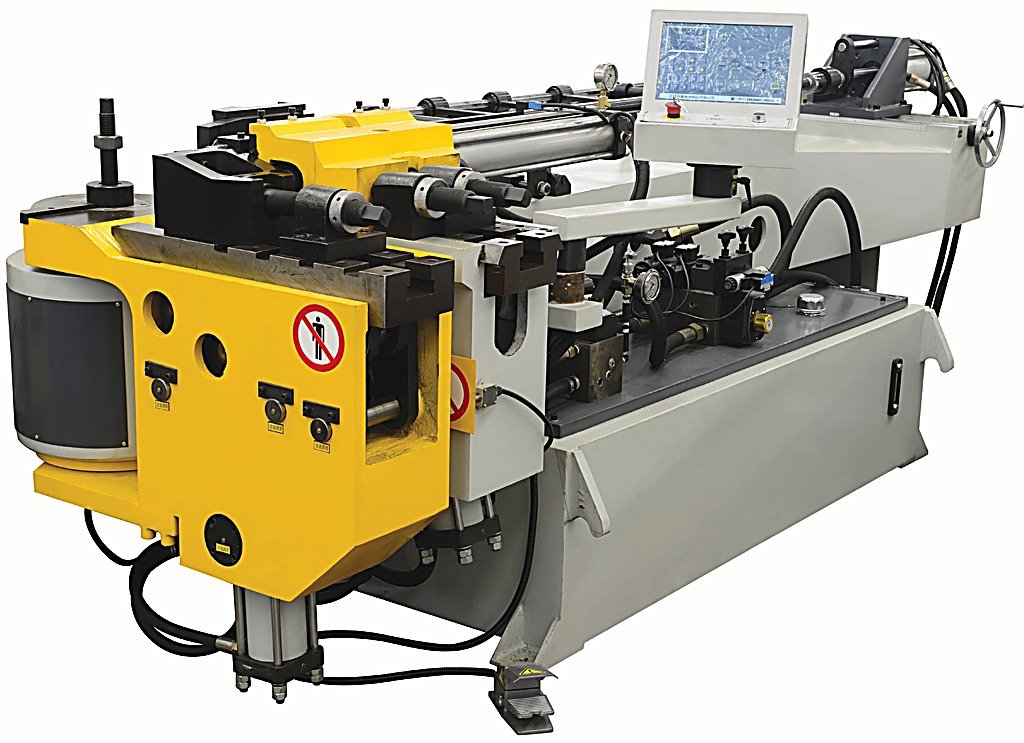
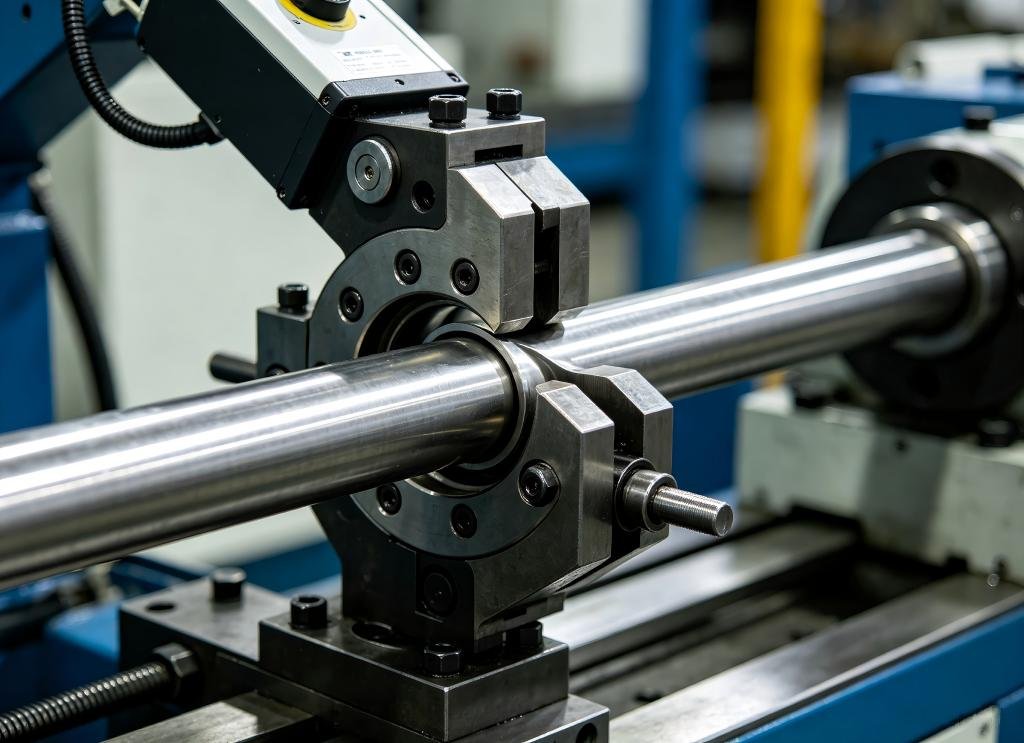
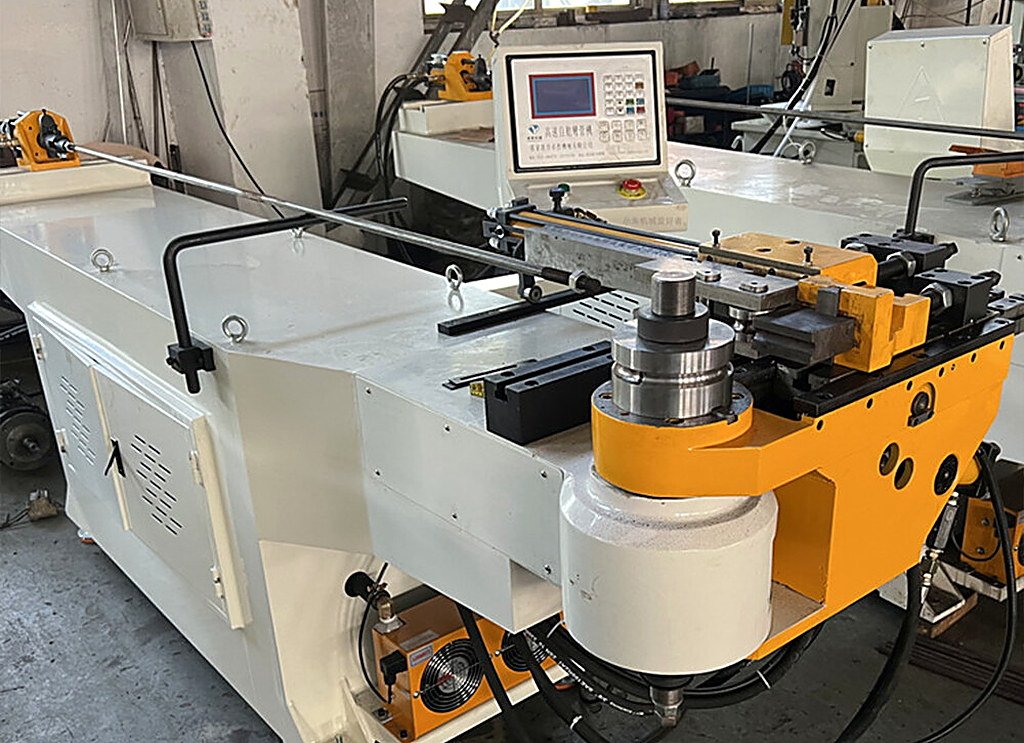
Addressing these pain points, the new generation of automatic fence bending machines has completed a systematic upgrade around three core goals: program-controlled operation, one-pass forming and rapid changeover. At the drive level, these machines generally combine hydraulic bending power with servo-controlled feeding axes: the hydraulic system delivers stable, sufficient bending torque for full, well-formed arcs on large-section tubes, while servo motors precisely control feed length and rotation angle so that the start and end positions of every arc segment are programmable and repeatable. At the control level, the CNC system pre-packages common fence geometries — arch, wave, S-shape and U-shape — as parameterized templates; operators only enter a small set of values such as tube diameter, wall thickness, bending radius and arch height, and the system automatically generates the bending program together with springback compensation, removing dependence on veteran operators’ manual layout experience. At the tooling level, quick-change bending dies, anti-wrinkle dies and clamping dies dramatically shorten specification changeovers, and on some models modular die design allows an entire die set for a different tube diameter to be swapped in minutes, cutting changeover preparation from hours to tens of minutes.
From Stand-Alone Machines to Coordinated Lines
It is worth noting that the efficiency gains in fence tube bending are not confined to the bending station itself. More and more workshops now link automatic fence bending machines with tube cutting machines, tube end forming machines and punching machines through roller conveyor lines, creating a continuous flow of “cut-to-length — bend — punch — end form.” After automatic length setting on the loading rack, tubes travel by conveyor directly into the bending station, and bending programs are linked with cutting lists through the control system, eliminating handling damage and re-alignment caused by manual transfer. For engineering guardrail projects with particularly strict arc tolerances, some lines add inline arc profile inspection after the bending station, automatically fine-tuning springback compensation by comparing the measured contour against the target contour, so that even the first articles approach finished-product requirements and trial-bend losses drop sharply. This line-level coordination keeps fence workshops running at a stable rhythm even when orders fluctuate, and makes small-batch, multi-specification custom orders economically viable.
Broadening Application Scenarios
In terms of end use, automatic fence bending machines now reach far beyond traditional road barrier production. In residential and industrial-park settings, the curved rails of zinc-steel perimeter fences, balcony railings and stair handrails all depend on stable bending; in agriculture and livestock, long-arc field fencing places extremely high demands on continuous operation capability; in public facilities, stadium fencing frameworks, solar mounting structures and landscaped greenbelt guardrails set higher standards for large-radius, multi-segment continuous bending accuracy and surface protection. The trend toward personalized product styling is also pushing equipment capability forward — to realize decorative arcs such as petal and cloud patterns in landscape guardrails, machines must support more complex multi-arc programming and finer speed control, further widening the quality gap between automated bending and manual forming.
What to Focus on When Selecting a Machine
For fabricators planning to upgrade their fence bending capability, four dimensions deserve close attention during machine selection. The first is specification coverage — maximum tube diameter, minimum bending radius and wall thickness range — which should leave headroom against the existing order mix. The second is programming ease: whether the parameterized template library covers a workshop’s mainstream product geometries directly determines changeover efficiency and dependence on operator experience. The third is structural rigidity and its effect on long-term arc stability: the rigidity of the bed and main shaft determines how well the machine holds accuracy through high-frequency batch production. The fourth is line-expandability: whether the machine reserves interfaces for linkage with cutting and punching stations defines the room for future automation upgrades. Overall, the value of an automatic fence bending machine should not be judged by single-bend speed alone; the batch consistency, reduced scrap rates and lower labor dependence it delivers are the real sources of competitiveness for fence manufacturers.
Conclusion
The guardrail and fencing market is evolving from “available” to “excellent,” with clear trends toward personalized styling, tighter delivery schedules and standardized quality. With program-controlled bending, rapid changeover and line-coordination capability, the automatic fence bending machine gives tube fabricators a reliable path through this transition. As CNC technology and bending processes continue to converge, the automation level of fence tube forming will climb further — and workshops that complete their equipment upgrades first will hold a stronger position in the next round of order competition.