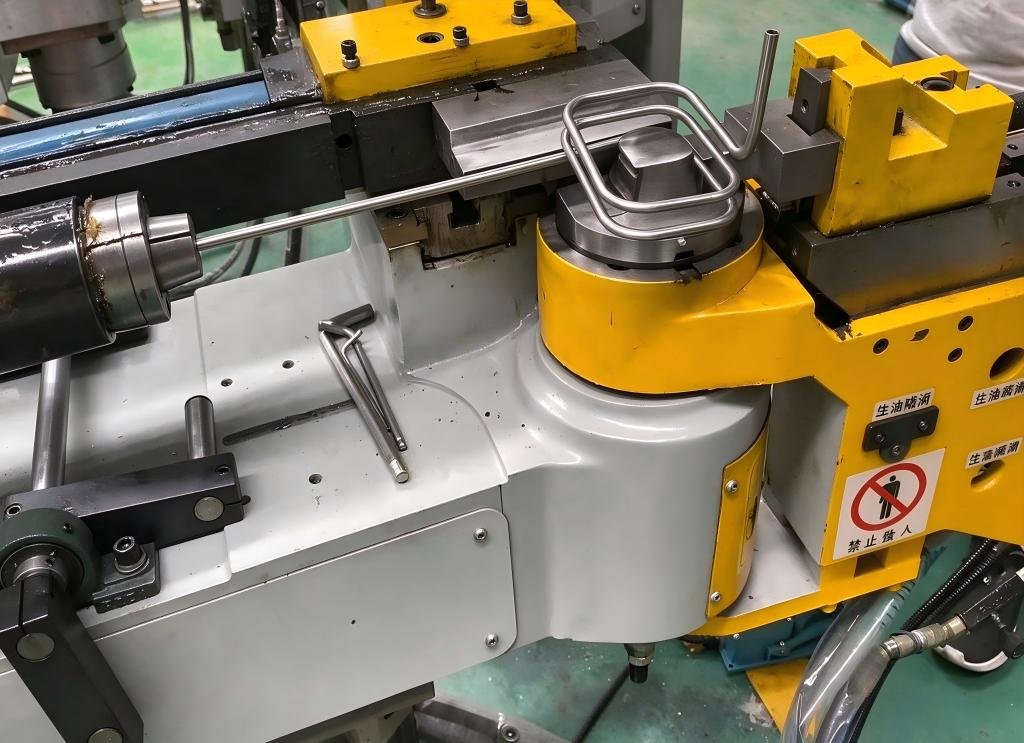
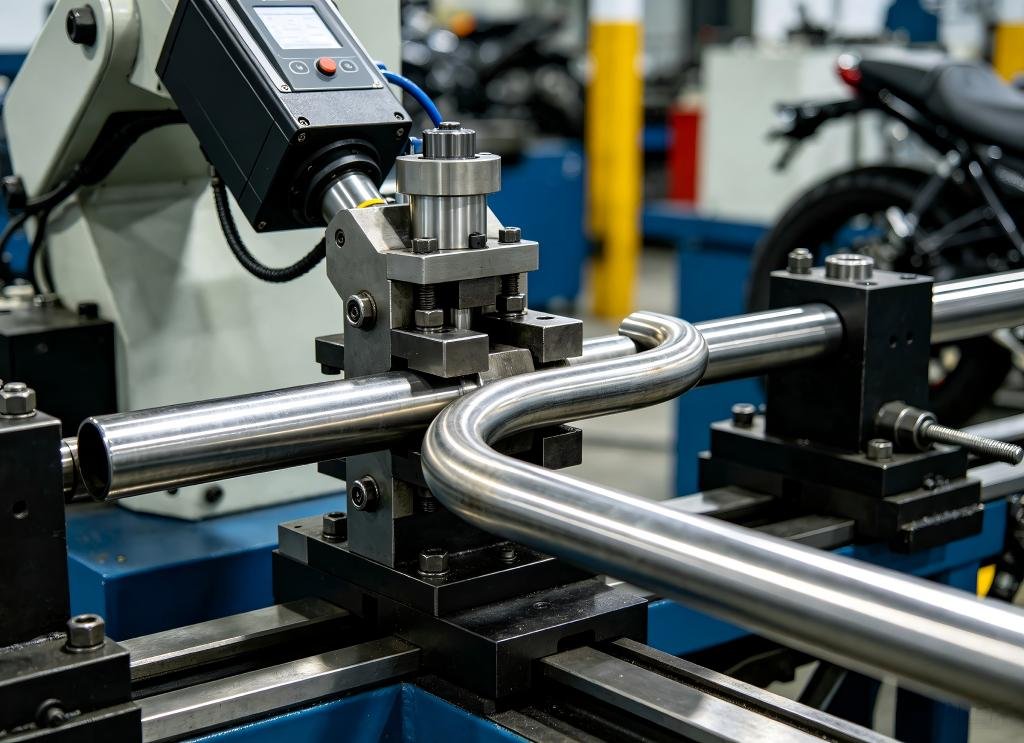
Bent Tube Components: How Modern CNC Tube Bending Sets the Quality Ceiling for Curved Metal Parts
News 2026-11-09
From “Bending an Arc” to “Bending to Precision”
In the metal forming industry, bent tube components are often treated as an unglamorous intermediate step—a pipe is curved into the required angle, passed to the next operation, and that is that. But anyone who has walked through the production floor behind automotive exhaust lines, fitness equipment frames, HVAC piping, marine tube systems or structural steel fabrications knows better: behind every acceptable bent tube stands a complete system of material mechanics, tooling design, CNC programming and quality control. The moment a tube leaves its straight state, every millimeter of wall thickness, every degree of rotation and every segment of arc enters a contest against invisible adversaries—springback, wrinkling, ovalization and wall thinning.
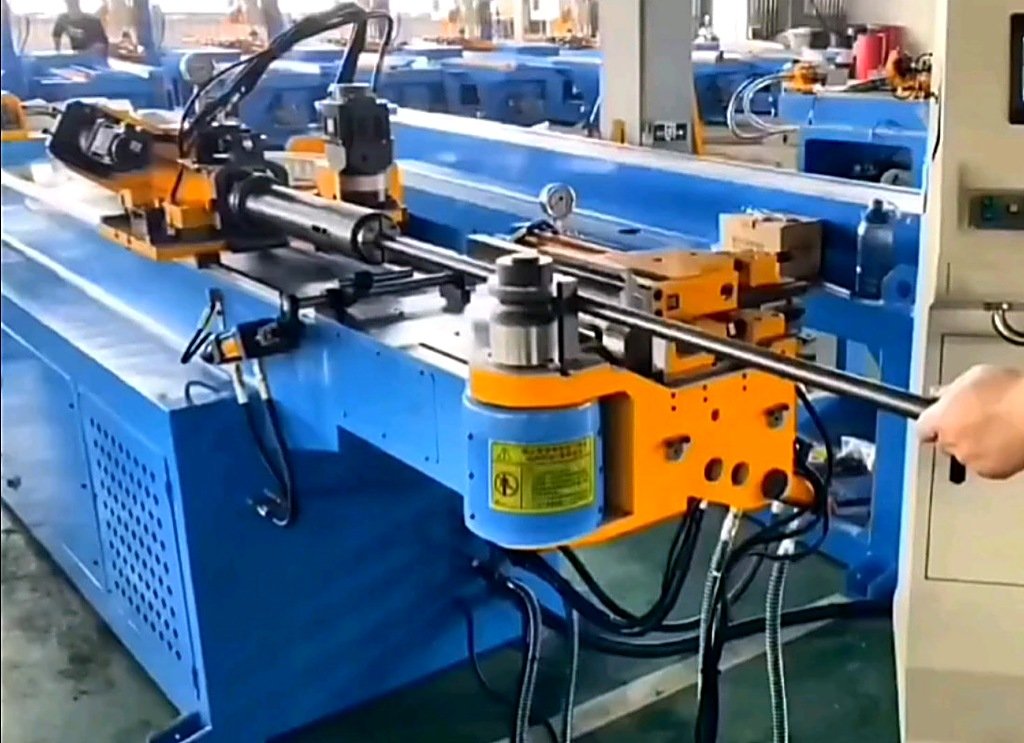
Industry observation shows that as end products demand higher structural strength, better appearance consistency and tighter assembly interchangeability, bent tube manufacturing has moved decisively beyond the old “if it bends, it ships” mindset into an era where tubes must bend accurately, bend consistently and bend repeatably. The force driving that shift is the steady evolution of CNC tube bending technology over recent years.
Four Hurdles Every Bent Tube Must Clear
Understanding bent tube quality starts with understanding what actually happens when metal curves. As a tube enters the plastic deformation zone under the bending die, the outer side of the neutral axis stretches while the inner side compresses, producing four classic defect families:
**Wall thinning.** Tension on the outside of the bend stretches the wall thinner. Excessive thinning directly undermines pressure capacity and fatigue life—an absolute red line in boilers, refrigeration circuits and automotive brake lines.
**Inner wrinkling.** Surplus material on the compression side, if left unsupported, piles up into axial waves. Wrinkles are not just cosmetic; they become stress concentration points.
**Ovalization.** A bent round tube is no longer perfectly round—the cross-section flattens into an ellipse, and once it exceeds tolerance it will no longer mate with flanges and fittings.
**Springback.** After unloading, the tube relaxes a few degrees back toward straight. If the compensation value is miscalculated, batch production will reproduce that error one part after another.
These four hurdles explain why bent tube work is never a brute-force job. It is a discipline of precisely predicting and controlling a deformation process.
CNC Bending: Writing the Veteran’s Touch Into Code
Conventional hydraulic bending relied on an operator’s feel for the machine, so quality tracked personal experience. CNC tube bending has made that experience explicit and digital: bend angle, feed length and spatial rotation angle (ROT) are all program-driven, servo axes replace hydraulic cylinders for positioning, and a complex three-dimensional component—a car seat frame tube with three arcs and two rotation planes, for example—can be completed continuously in a single setup with repeatability stable at arc-minute level.
Compound multi-die geometry is a development worth noting. By mounting multiple bending dies on one machine and rehearsing the entire bend sequence in simulation software, engineers can see wall-thickness distribution, cross-section distortion and predicted springback before material ever touches the tooling—moving trial and error from the machine to the screen. For aerospace-grade and medical-grade tube work, this “simulate first, bend second” workflow is becoming the industry default.
Feed accuracy and rotation accuracy matter most on multi-bend, three-dimensional parts. Servo feeding with closed-loop feedback keeps cumulative error at sub-millimeter levels even after repeated infeeds—which is exactly what allows e-bike frames, hospital bed rails and multi-bend fitness tubing to assemble interchangeably.
The Application Map: How Many Industries One Bent Tube Carries
The reach of bent tube components is wider than most people assume:
– **Automotive and rail**: exhaust systems, fuel lines, brake lines, seat frames, steering columns—a single vehicle carries hundreds of bent tubes;
– **HVAC and refrigeration**: copper and aluminum elbows in air conditioners, intercoolers and radiators, where bend quality directly affects heat-exchange efficiency and assembly takt;
– **Fitness equipment and furniture**: treadmill handrails, pull-up bars, office chair bases, children’s high-chair frames—bent tubes that are structural and visible at once;
– **Marine and boilers**: large-diameter, heavy-wall tube systems that test machine torque reserves and die rigidity;
– **Construction and solar**: curved structural members and solar mounting tubes, where large radii with minimal distortion define cold bending quality.
Each industry scores bent tubes differently—automotive lines judge cleanliness and pressure ratings, furniture judges whether the arc flows smoothly and identically part to part, fitness frames judge the weld-fit-up gap before welding. But every scoring system starts from the same place: controllability of the bending process.
Automation and Flexibility: The Line Is Changing Shape
The next step for CNC bending is embedding it into unmanned production. Mature cells now chain an automatic loading rack, the bending mainframe, in-line inspection and unloading robotics: the operator sets batch parameters, and the machine handles loading, pre-bending, multi-segment bending, rotation and cutting on its own. Some lines integrate a laser cutting unit, merging “bend” and “cut” at one station and eliminating a second setup.
Flexibility pays just as clearly. Orders are shifting toward more variants, smaller batches and faster changeovers; quick-change tooling adapts one die set across multiple tube diameters, stacked dies cover multiple radii, and offline programming compresses changeover from hours to tens of minutes. For tube fabricators living on export orders, that flexibility converts directly into the ability to win work.
Quality Control: From Sampling to Full Inspection and Process Governance
Quality evaluation for bent tubes is moving from after-the-fact sampling to in-process governance. The four core indicators—angle, wall thinning ratio, ovality and wrinkle height—can now be checked 100% through in-line contour scanning and vision systems, while springback compensation is increasingly auto-tuned by the control system from material batch data instead of resting on static first-article settings.
For buyers, the lens on a tube bending supplier shifts accordingly: beyond the machine and die list, what matters is the depth of the process database. The more complete the accumulated springback curves for a given material, the sooner a new part yields its first good piece, and the more consistent the production run.
The Takeaway
Bent tube components are classic “quiet critical parts” of industrial products: inconspicuous, yet decisive for the performance ceiling of the whole vehicle or machine. With CNC controls, servo drives, simulation software and in-line inspection now converging on this field, tube bending has grown from a craft that depended on feel into a data-driven precision manufacturing stage. Whoever predicts deformation more accurately and accumulates deeper process data will lead the next round of competition for high-quality bent tube components—and that is the upgrade story a curved piece of metal tubing tells.