Hydraulic vs CNC Pipe Bending Machines: A Buying Guide for Mexico, Spain and Argentina
News 2026-09-04
Manufacturers comparing hydraulic and CNC pipe bending machines often ask which technology is “better.” The useful answer is that the better machine is the one that matches the part geometry, production volume, labor model, quality requirements, and available investment. A simple component with one bend does not need the same control system as an automotive tube with several bends on different planes. Likewise, a job shop changing products every day has different priorities from a factory producing thousands of identical exhaust parts.
This guide is written for metalworking companies in Mexico, Spain, Argentina, and other international markets that need to compare hydraulic, semi-automatic, CNC, and fully automatic tube bending equipment. It focuses on practical purchasing factors rather than labels alone.
What Is a Hydraulic Pipe Bending Machine?
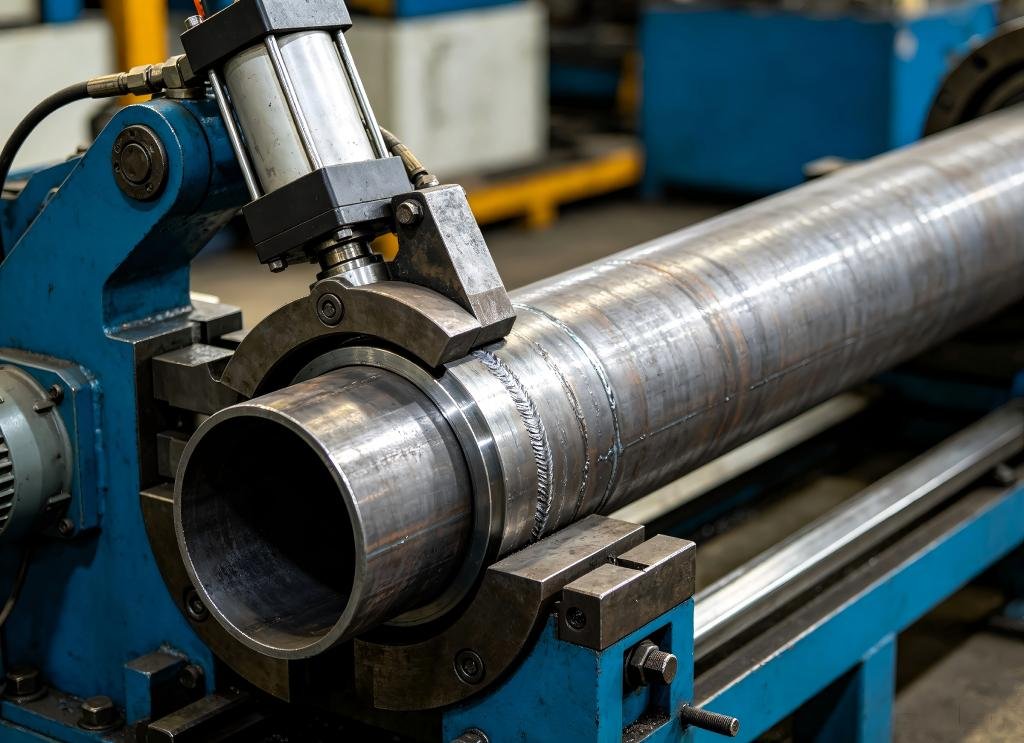
A hydraulic pipe bending machine uses hydraulic power for the bending motion and often for clamping and other forming functions. The term covers a wide range of equipment, from relatively simple operator-loaded machines to advanced systems with programmable controls. Therefore, “hydraulic” does not automatically mean manual or low accuracy.
In a common semi-automatic arrangement, the operator loads and positions the tube while the machine controls the bend angle. This can be an economical solution for parts with one or two bends, lower production volumes, or components that do not require automatic rotation and feeding.
Hydraulic systems are widely understood by industrial maintenance teams. They can provide high forming force and robust operation, but they require attention to oil condition, temperature, leaks, valves, seals, and pressure settings. Ambient temperature and maintenance practice can influence consistency if the system is not well managed.
What Is a CNC Tube Bending Machine?
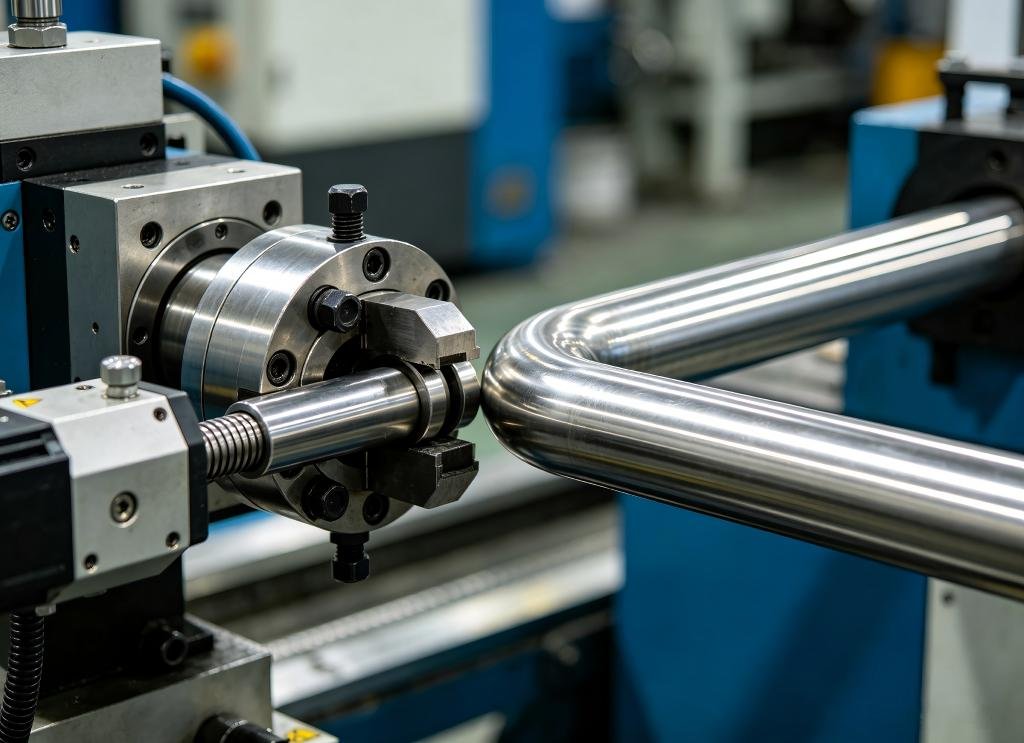
A CNC tube bending machine uses numerical control to coordinate the programmed sequence. In typical rotary-draw bending, the important motions include feeding the tube to the next bend position, rotating it to the required plane, and producing the bend angle. Servo-controlled axes improve repeatability and make it easier to produce multi-bend three-dimensional parts.
CNC equipment can still include hydraulic functions. The important question is not whether any hydraulic power is present, but which movements are numerically controlled, how programs are stored, how corrections are applied, and how much operator handling remains.
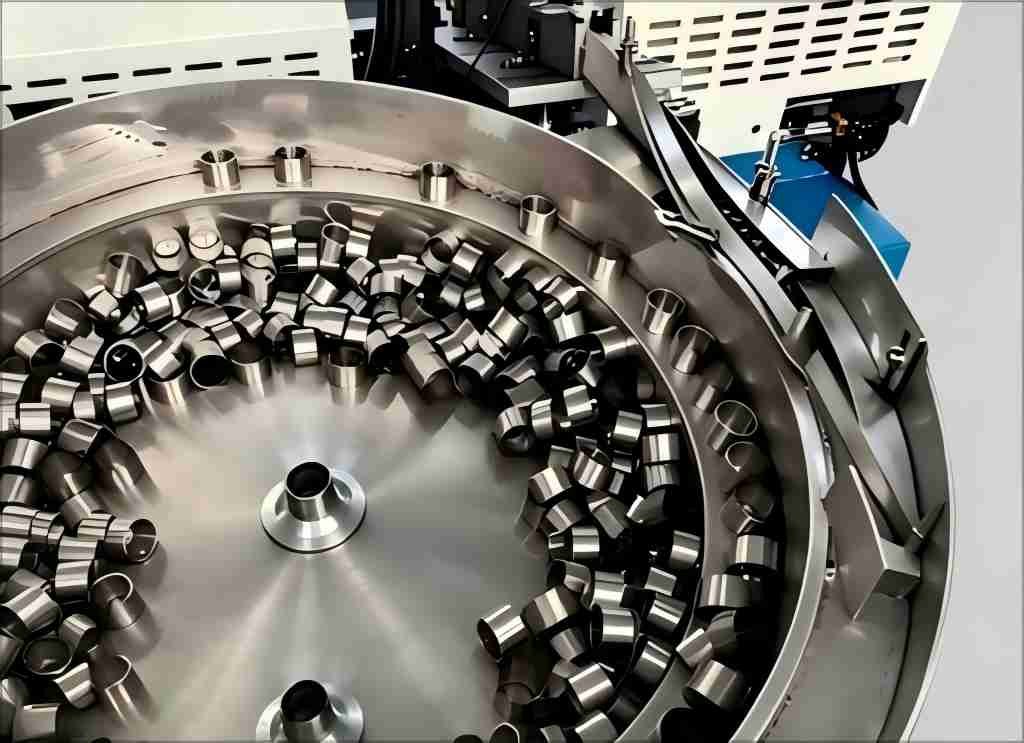
A fully automatic system may add loading, unloading, seam orientation, punching, cutting, end forming, inspection, or robotic handling. These additions can reduce labor and work-in-process, but they should be justified by the product and production plan.
Key Difference 1: Part Complexity
Semi-automatic hydraulic equipment is often suitable for simple parts where the operator can position the tube reliably. Examples may include furniture frames, handles, basic structural components, and short-run repair or fabrication work.
CNC control becomes more valuable as the number of bends and planes increases. Automotive fluid tubes, exhaust components, shipbuilding pipes, and complex furniture frames may require accurate distances and rotations between bends. Automatic feeding and rotation reduce manual marking, measurement, and repositioning.
Ask the supplier to review the most difficult part, not only the easiest part in the product family. A machine that handles the diameter may still have interference or grip-length limitations when bends are close together.
Key Difference 2: Production Volume and Cycle Time
For low-volume work, the lower investment and simple operation of semi-automatic equipment may create the best return. The operator’s time is acceptable when only a few parts are required, especially if product designs change frequently.
For medium- and high-volume production, CNC feeding and rotation can shorten handling time and reduce dependence on manual measurement. Fully automatic loading and unloading may improve output further. However, the complete cycle should be studied. Catalogue bending speed is only one element; loading, clamping, feeding, rotation, mandrel movement, unloading, and inspection all affect finished-parts output.
Provide the number of finished parts required per hour, shift, month, and year. This allows the supplier to compare machine cycle time with the buyer’s real demand and calculate whether extra automation is justified.
Key Difference 3: Repeatability and Operator Dependence
A skilled operator can produce good parts on semi-automatic equipment, but results may depend on accurate manual positioning and consistent work habits. Training, fixtures, stops, and documented setup procedures are important.
CNC equipment stores part programs and controls important movements. This improves repeat production and makes corrections easier. It does not eliminate the need for trained people. Operators must still install tooling correctly, confirm material, apply lubrication, inspect parts, and respond to variation.
When labor turnover is high or several shifts share equipment, saved programs and standardized setup records can provide significant operational value.
Key Difference 4: Changeover and Product Variety
A company producing many small batches should evaluate how quickly it can change tooling and programs. CNC storage helps recover known settings, but physical tooling change may still determine downtime. Clear tool identification, setup sheets, and accessible machine design matter.
For a dedicated high-volume line, changeover may be less important than automatic operation and reliability. For a contract manufacturer serving automotive, furniture, marine, and general fabrication customers, flexibility may be the highest priority. List current products and credible future products when discussing machine capacity.
Key Difference 5: Investment and Total Cost
The purchase price is visible, but total cost includes tooling, freight, import charges, installation, training, energy, hydraulic oil, maintenance, floor space, labor, scrap, changeover time, and lost production. A lower-priced machine may cost more if it requires extra operators or creates inconsistent parts. A highly automated machine may also be uneconomical if it runs only a few hours each week.
Build a simple cost model using annual production. Estimate operator hours, expected scrap reduction, output, changeover savings, and maintenance. Use conservative assumptions. This makes the comparison between hydraulic, CNC, and fully automatic equipment more objective.
Material, Diameter, Wall Thickness, and Radius
Machine type cannot be selected without the tube specification. Iron, stainless steel, aluminum, copper, and aluminum profiles require different forces and tooling strategies. A machine’s maximum diameter normally refers to defined material and wall conditions. It should not be treated as a universal capacity for every alloy and radius.
Suzhou Jiuqiang Machinery Technology Co., Ltd. offers tube bending solutions for a range of metal materials. Depending on the application and configuration, machine solutions can be evaluated for outside diameters up to 114 mm and wall thicknesses up to 10 mm. The engineering team confirms final capacity after reviewing material grade, cross-section, centerline radius, and part geometry.
Tight-radius thin-wall parts may require a mandrel, wiper die, pressure-die assistance, and carefully controlled lubrication. Profiles and non-round sections require tooling made for the exact shape. The quotation should state the supported part and included tooling rather than only a general machine capacity.
Considerations for Buyers in Mexico
Mexico has extensive automotive, appliance, furniture, and metal-fabrication activity. Buyers supplying automotive programs may need documented sample approval, stable repeat production, and reliable change management. When the machine will support a specific customer project, share the part drawings, launch schedule, expected annual volume, and inspection method early.
Confirm the factory’s voltage and frequency, preferred control language, safety requirements, and availability of maintenance staff. Discuss remote diagnosis, spare-parts planning, and shipment of critical wear items. If the machine will join an automated cell, define interfaces and responsibilities between equipment suppliers before approval.
Considerations for Buyers in Spain
Spanish buyers may serve automotive, furniture, metal construction, renewable-energy, transport, and marine applications. Documentation, conformity requirements, guarding, electrical standards, and risk assessment should be discussed as part of the project specification rather than after production is complete.
Ask the supplier to state the machine configuration, available documentation, training format, and acceptance procedure clearly. For facilities with varied production, evaluate program management, tooling change time, and the ability to bend different metals. English documentation can support international teams, while locally prepared operating procedures may be needed for daily use.
Considerations for Buyers in Argentina
Argentine manufacturers may need to balance capability with practical maintenance and spare-parts planning. Long international supply chains make preventive stocking important. The recommended list should distinguish normal consumables, wear items, and strategic electrical or hydraulic components.
Before shipment, request an acceptance test using representative tube and a defined inspection sheet. Keep backups of machine parameters, PLC or CNC data as permitted, electrical documentation, and supplier contacts. Clear diagnostic procedures can reduce downtime when on-site support requires travel.
Factory Acceptance Testing
A factory acceptance test should demonstrate more than one visually acceptable bend. Agree on the material, part drawing, number of test pieces, measurement method, cycle time, and acceptable results before the test. Important criteria may include:
- Bend angle and springback compensation
- Distance and rotation between bends
- Overall part envelope and end position
- Ovality and minimum wall thickness
- Wrinkles, cracks, scratches, and clamp marks
- Cycle time and repeatability over several parts
- Tool change and program recovery
If production tube cannot be sent to the supplier, agree on a representative alternative and repeat critical validation after installation.
Questions to Ask Every Supplier
- Which exact part and material is the proposed machine sized for?
- Which axes are servo controlled and which functions are hydraulic?
- What tooling is included in the quotation?
- Is a mandrel and wiper system included for tight-radius parts?
- What is the estimated complete cycle time for our drawing?
- How are programs, corrections, and backups managed?
- Which spare and wear parts should be stocked locally?
- What installation, training, and remote support are available?
- Which documents and test records are supplied?
- How will factory and site acceptance be performed?
Which Machine Should You Choose?
Choose semi-automatic hydraulic equipment when parts are relatively simple, volumes are modest, manual positioning is acceptable, and investment must remain controlled. Choose CNC equipment when parts contain multiple bends and planes, repeatability is important, programs will be reused, or manual positioning creates too much labor and variation. Consider fully automatic loading and unloading when volume, cycle time, and labor savings support the additional investment.
There is also room for mixed solutions. A manufacturer may use CNC equipment for complex, repeat products and a semi-automatic machine for prototypes or low-volume components. The correct factory strategy does not require every part to run on the most automated machine.
Conclusion
Hydraulic versus CNC is not a contest between old and new technology. It is a comparison of process control, automation, flexibility, and total cost for a defined group of parts. The purchasing team should begin with drawings, materials, quality limits, and volume, then evaluate tooling, cycle time, service, and acceptance.
Suzhou Jiuqiang Machinery Technology Co., Ltd. supplies hydraulic, semi-automatic, CNC, and fully automatic tube bending solutions for automotive, exhaust, furniture, shipbuilding, and other metal-tube industries. Buyers in Mexico, Spain, Argentina, and other markets can send part drawings and production requirements for a configuration review. A detailed request makes it possible to recommend the machine and automation level that fit the real production goal.