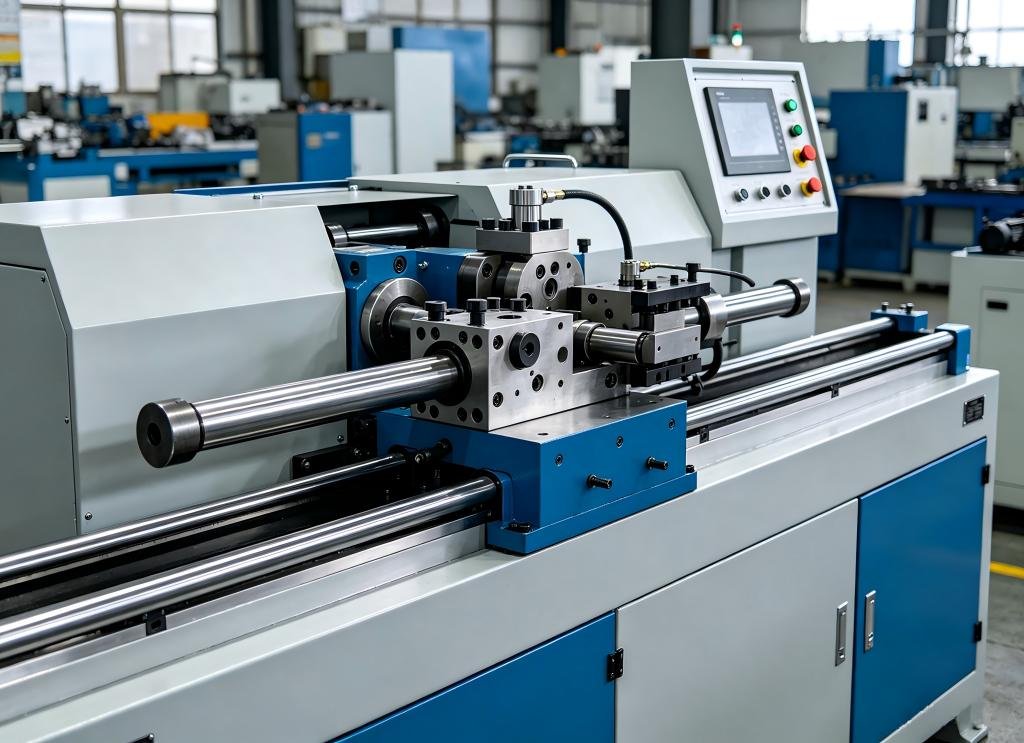
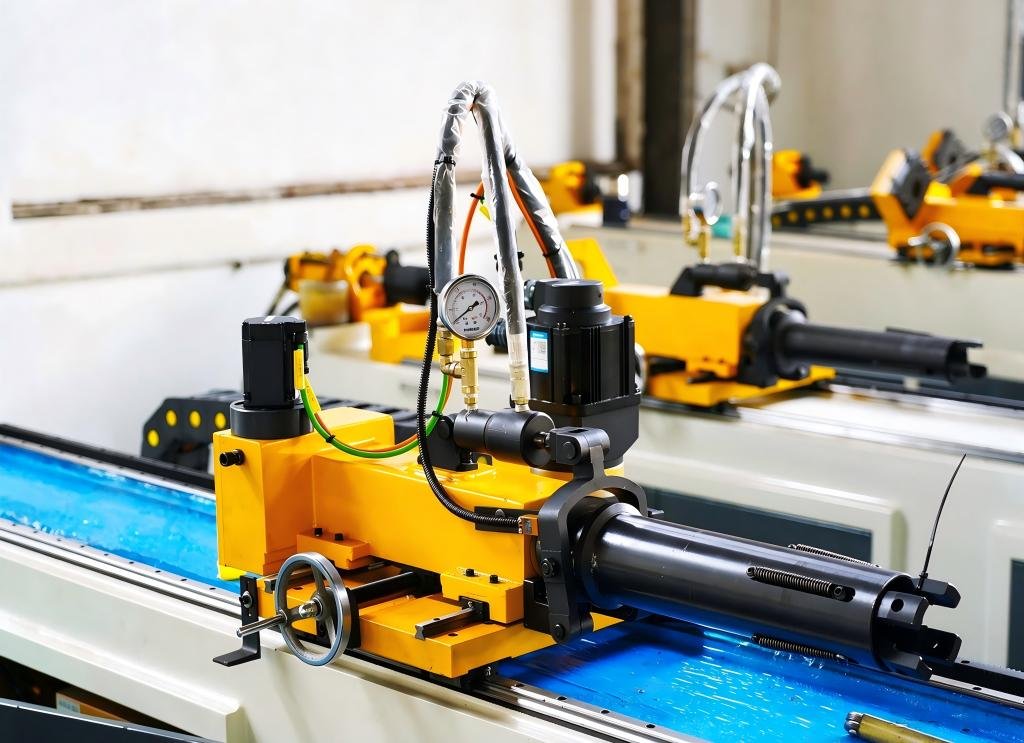
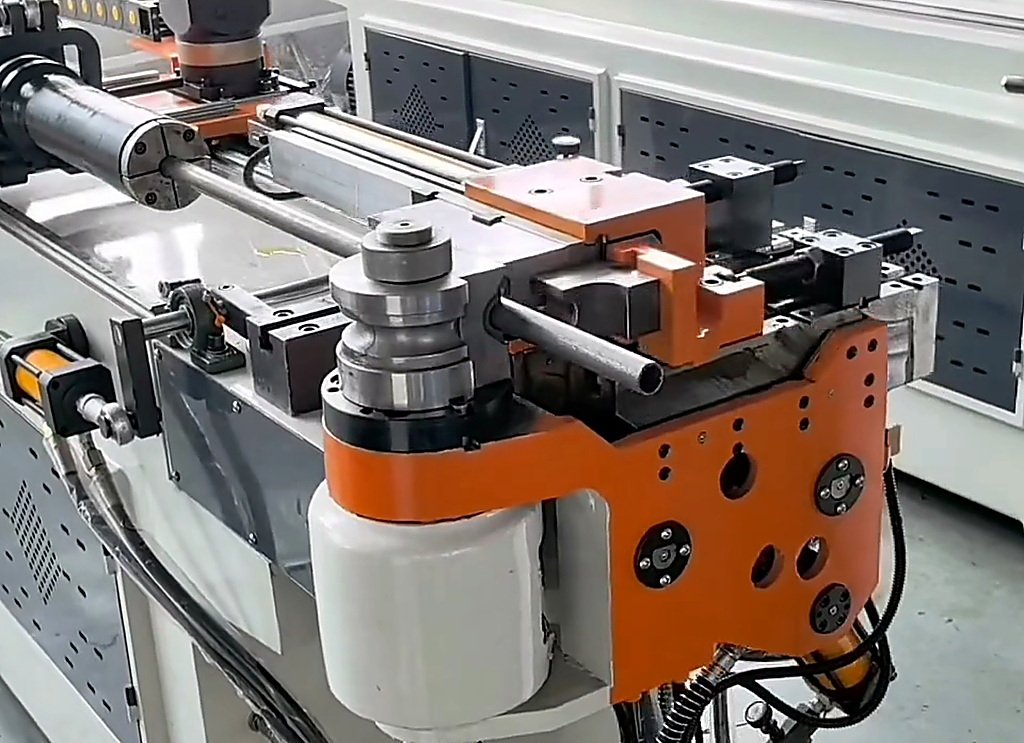
Bicycle Copper Tube Bending Machine: Turning Soft, Wrinkle-Prone Copper into Clean, Repeatable Curves
News 2026-11-11
Across the bicycle and light-vehicle supply chain, tube forming remains one of those invisible processes that quietly decide final quality. Frames, forks, carriers, parking stands, basket brackets, brake lines, lamp mounts and decorative trims all begin as straight metal tubes that must be bent precisely, held to shape, and welded into position. Among these materials, copper tube occupies a special place: it conducts heat and electricity beautifully, forms readily, carries a warm surface luster, and is one hundred percent recyclable. It is increasingly specified for brake lines, decorative components, display and parking fixtures, and functional accessories. Yet anyone who has actually bent copper knows the paradox — copper is easy to bend and extremely hard to bend well.
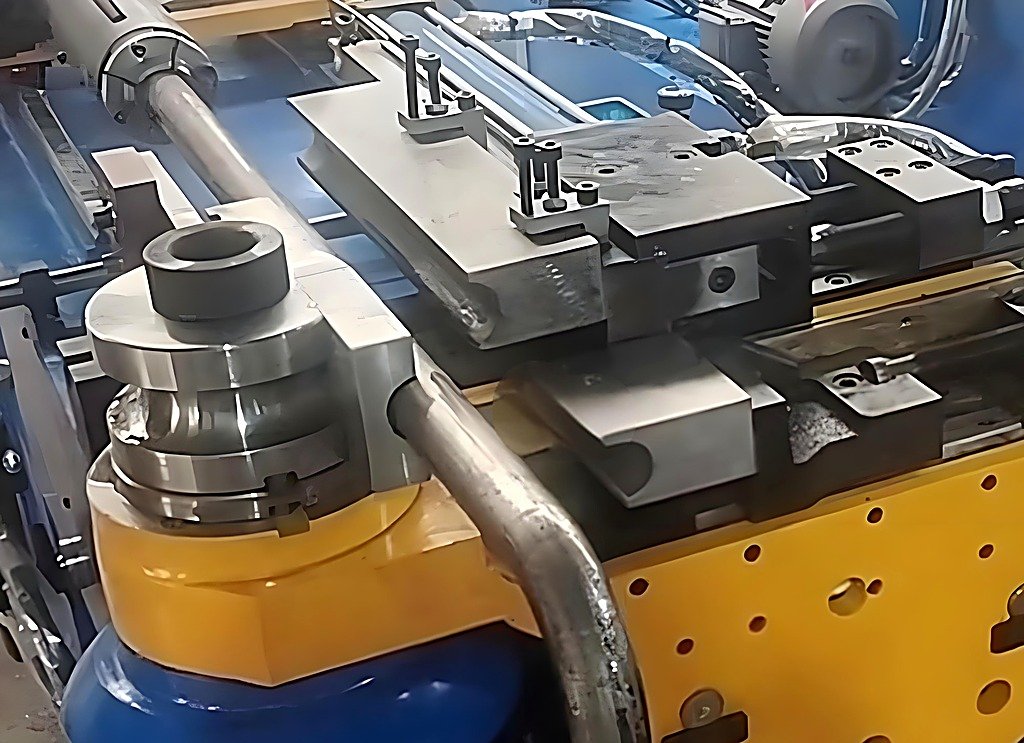
Why Copper Bends Easily but Fights Back
Compared with steel or aluminum, copper has a low yield strength and excellent ductility. It feels almost eager to form. That softness is exactly the problem. During bending, material in the tube wall flows violently: the inside of the bend tends to buckle into wrinkles, while the outside stretches thin and can crack. The thinner the wall and the tighter the radius, the stronger these tendencies. Shop-floor experience is consistent on this point: copper is far more sensitive to process parameters than steel. The same tooling and the same angle setting can produce completely different results with a different wall thickness or a different temper of copper alloy. In volume production, one wrinkled bend is scrap, and across a line producing thousands of bends, a single uncontrolled parameter multiplies rework fast.
Wrinkling, Ovality and Springback: The Three Classic Failures
Copper tube bending fails in three familiar ways. Wrinkling appears on the inside of the bend when the compressed wall loses stability — often because the wiper die is not fitting tightly or the mandrel is positioned too far back. Ovality is the flattening of the round cross-section into an ellipse, which directly compromises fit and sealing against couplings. Springback is the elastic recovery after the tooling releases: copper may be softer than steel, but its springback is far from negligible, and it varies between batches and between annealed and half-hard tempers. Without compensation, the same program gradually drifts out of tolerance.
These three failures interact. Pushing the mandrel further forward to suppress wrinkles increases thinning on the outside of the bend. Over-bending to defeat springback can push ovality out of limits. Holding all three in check simultaneously is precisely what defines a capable modern copper tube bending machine.
The Mandrel: The Soul of Copper Tube Bending
In rotary draw bending, the mandrel is the first determinant of success. The industry works with several mandrel forms — plain cylindrical plugs, and multi-ball linked mandrels among them — matched to the relative bend radius and wall thickness of the job. For thin-wall copper, a multi-ball mandrel continuously supports the inner wall through the arc, sharply reducing wrinkles and cross-section distortion. Mandrel nose position is the most critical setting of all: too far back, wrinkles appear immediately; too far forward, the outer wall thins excessively or tears. Where veteran operators once “hunted” for mandrel position bend by bend, modern CNC machines have converted that experience into stored, repeatable parameters — mandrel advance, wiper die pressure, clamp force and booster speed are all programmable variables in the recipe.
Springback Compensation: From Trial Bends to Calculated Angles
Traditional manual bending relies on trial and correction: bend one, measure it, adjust, repeat. Acceptable for prototypes, unworkable at volume. Modern machines apply systematic springback compensation: bend slightly past the target angle by a calculated amount, check the first article, iterate, then lock the compensation value into the program. Because copper’s springback shifts with material temper, disciplined shops calibrate on the first piece of every new batch, keeping angular tolerance locked in. For brake lines, where angle and alignment tolerances decide whether a line drops into place on first assembly, this capability is the difference between one-pass fitment and hours of rework.
What Servo Drive Changes
The most visible technical shift in copper tube bending equipment over recent years has been the replacement of hydraulic-mechanical actuation with servo drive. Servo axes independently control bending, feeding and rotation — the classic three-axis configuration — with each motion closed-loop on an encoder and repeatable to a tenth of a degree or better. For copper, the significance goes beyond accuracy: feed and booster speed can be synchronized precisely with bend rotation, deforming the wall under the most uniform stress possible and cutting wrinkle and thinning risk at the same time. Servo systems also eliminate the constant mechanical stop adjustments of older machines; changing over to a different tube specification is a program call, not an hour of setup, which matters enormously in the multi-part, fast-turnover environment of bicycle accessory manufacturing.
Auto Feed and Single-Setup Forming: Consistency at Volume
On the production floor, a single tubular part often carries several bends at different angles and radii. With automatic feeding and multi-bend programming, a copper tube is clamped once and every bend is completed in one setup — no repeated marking out, no manual repositioning. The benefits are twofold. With human intervention removed, angle scatter within a batch narrows sharply. And because the tube surface is held and guided by the clamp and wiper dies throughout, it leaves the machine free of handling marks, preserving the warm luster that makes copper attractive for visible and decorative parts. Industry deployments of fully automatic copper tube bending lines in the automotive and two-wheeler sectors now deliver stable output in the thousands of parts per shift.
From Prototype to Production: Freezing the Process Data
The real barrier to good copper bending is not the machine; it is the accumulation of process data. Wall thickness, diameter, bend radius, copper temper and lubrication method each require recalibration of mandrel position and springback compensation. Leading operations therefore maintain a process archive for every part number: a complete program parameter set plus first-article inspection records, recalled instantly for repeat orders or changeovers. First article approved, batch production follows. This “data is the process” model turns copper tube bending from a craftsman’s touch into a replicable, transferable and auditable industrial workflow.
What Quality Inspection Looks For
Acceptance of bent copper parts concentrates on four checks: deviation of bend angle from design, ovality of the bend section, thinning rate of the outside wall, and surface condition. Angles are verified with gauges or coordinate measuring machines, ovality with calipers or dedicated gauges, and thinning by sectional sampling. On the surface, bent copper parts must show no die marks, scratches or oxidation discoloration — a demand that pushes tooling polish and lubrication management to a high standard. A well-run bending cell routinely holds scrap rates below one percent, the combined result of machine accuracy and disciplined process data.
Industry Outlook: Green Materials Meet Automation
Copper recycles indefinitely with essentially no loss of properties, a growing advantage as downstream buyers weigh the whole-life carbon footprint of their components. At the same time, orders for two-wheeler parts, parking fixtures and metal accessories increasingly arrive in smaller batches across more variants, raising the premium on flexible tooling and fast programming. The combination of servo drive, offline programming and automatic loading is set to become the standard configuration for copper tube bending equipment. And in this niche, the winners will be those who can deliver soft, thin-walled copper bends at volume without wrinkles, without ovality and without missed angles.
Closing Thought
Copper bends easily; bending it well is the hard part. From mandrel position and wiper die fit to springback compensation and servo synchronization, the modern bicycle copper tube bending machine translates a veteran’s feel into a table of stored parameters — so that every bent tube passes the gauge today and the durability test tomorrow. For the tube fabrication industry, this is more than an equipment upgrade: it is a dependable path from experience-based craft to data-driven manufacturing.