Precision CNC Tube Forming: Technical Core, Process Value and Selection Evaluation System of CNC Tube Bending Machines
News 2026-11-03
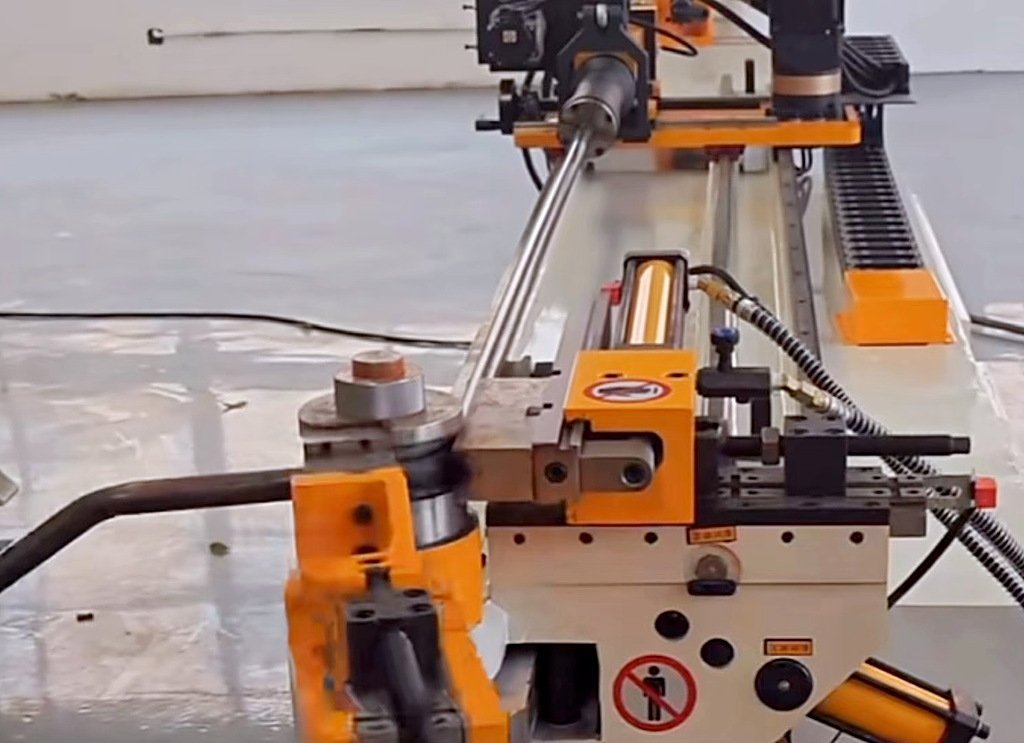
In the global metal tube plastic forming industry chain, CNC tube bending machines serve as core equipment for precision tube processing, reshaping quality standards and flexible production boundaries for tube component manufacturing. Driven by continuous upgrading of downstream sectors including new energy vehicles, fluid systems, precision hardware, high-end furniture tubing and aerospace supporting parts, end products impose unprecedented stringent requirements on the spatial profile, dimensional tolerance, inner wall forming quality and batch consistency of tube assemblies. Conventional hydraulic tube benders rely on manual adjustment and empirical compensation. They struggle to stably process complex 3D multi-bend tubes, thin-walled stainless steel, high-strength alloys and lightweight aluminum alloy profiles. Common defects such as tube wrinkling, cross-section flattening, outer surface scratches and scattered springback deviations lead to high scrap rates and lengthy changeover cycles, gradually becoming bottlenecks restricting quality improvement and efficiency gains for precision tube production lines. Adopting multi-axis servo linkage and digital control systems, CNC tube bending machines integrate tube feeding, spatial rotation, bending forming, mandrel movement, springback compensation and forming inspection into closed-loop program control, emerging as the mainstream solution for modern precision tube manufacturing.
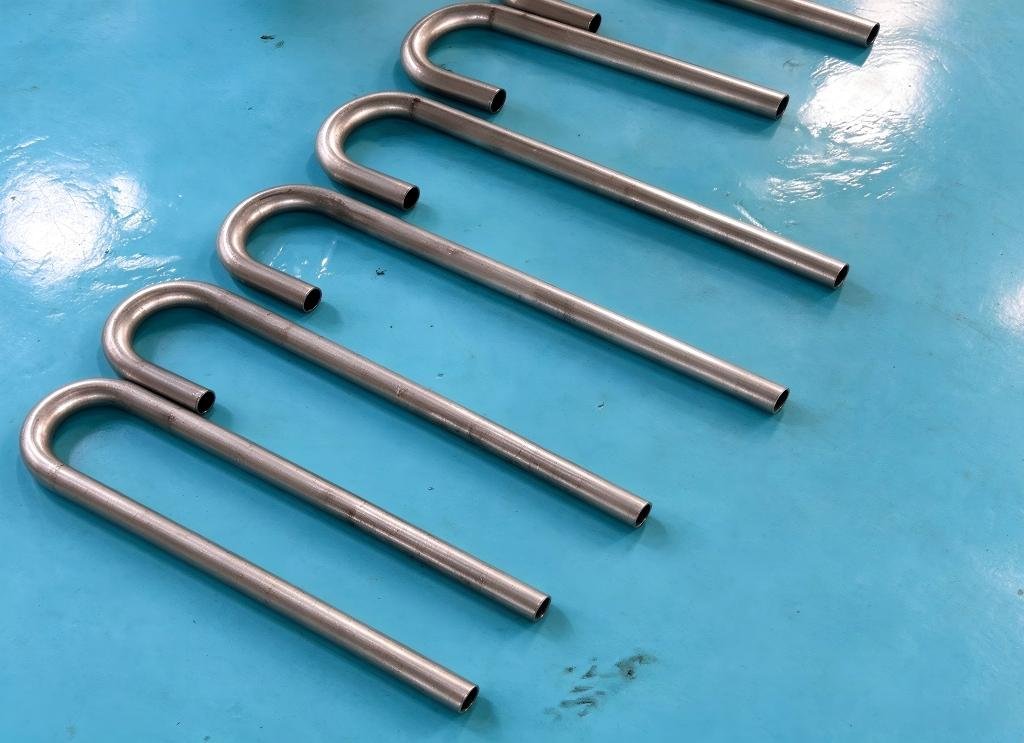
The core advantage distinguishing CNC tube benders from ordinary hydraulic models lies in the servo closed-loop motion control system, based on its underlying forming principle. The entire machining workflow is predefined by programs, covering automatic tube feeding, angular positioning, bending trajectory execution, real-time angle acquisition, algorithm-based springback compensation and post-forming inspection. Servo drive units paired with high-precision angle encoders and displacement sensors continuously collect actual position signals during forming, and dynamically adjust motion outputs against theoretical parameters. The system embeds a springback database corresponding to different materials, wall thicknesses and tube diameters, which automatically implements over-bending compensation for elastic recovery after metal plastic deformation, instead of relying on post-process manual correction by operators. This feedback mechanism fundamentally reduces angular and arc-length deviations among workpieces in the same batch, ensuring highly uniform tube contours in mass production, especially for tube assemblies requiring interchangeable fitting.
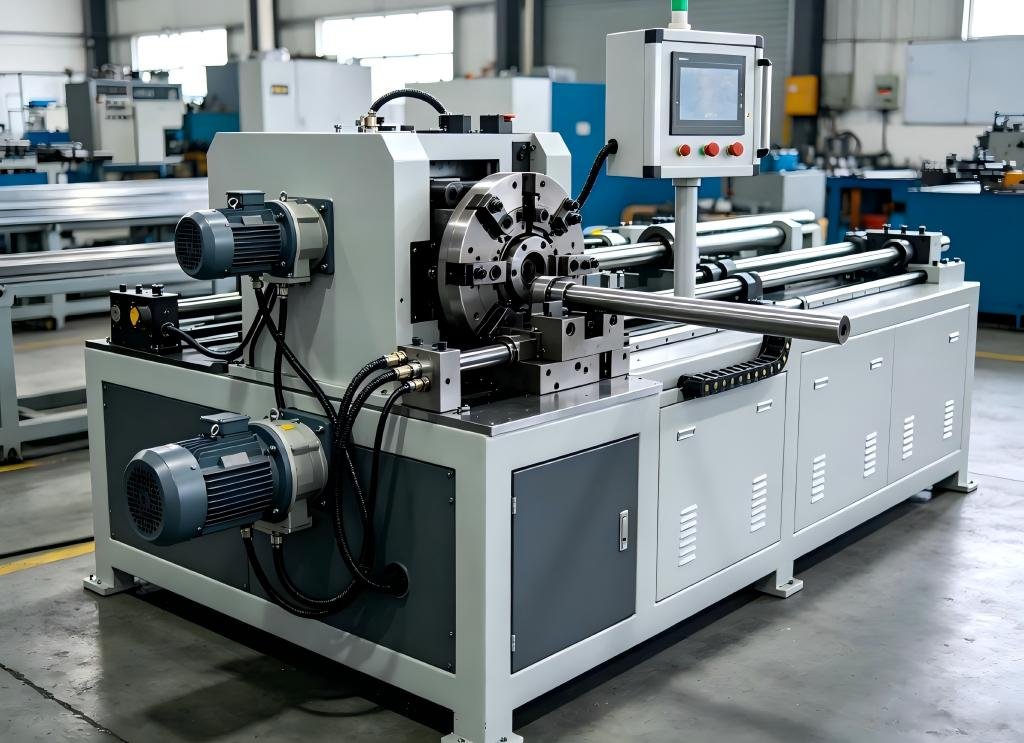
Mechanical rigidity and structural design form the fundamental evaluation factor determining the long-term stable machining performance of CNC tube bending machines. Recurring bending loads generate alternating stress on the machine frame, sliding table and clamping die seat. Insufficient frame rigidity causes minor vibration and deformation under continuous full-load operation, directly amplifying angular errors and ovality defects. Well-engineered equipment structures optimize castings, rib layouts and guide transmission schemes to minimize operational shaking. Equipped with fluid simulation validated clamping mechanisms, guiding supports and anti-wrinkle die arrangements, they restrain uneven material flow and reduce common forming defects like wrinkling and flattening during small-radius bending of thin-walled tubes. Metal materials vary greatly in mechanical properties: stainless steel, carbon steel, aluminum alloy and copper alloy differ in elongation, springback coefficient and buckling resistance. High-performance CNC tube benders deliver wide process adaptability, supporting material parameter switching within the system to accommodate diverse incoming workpieces.
The human-machine interaction logic and programming convenience of the control system directly affect production line changeover efficiency and training costs. Modern CNC bending systems generally feature visual touchscreen interfaces, supporting 3D drawing import, IGS/STEP tube model parsing, 3D preview simulation and automatic bend sequence arrangement. Operators can program complex spatial tubes without manually calculating coordinates point by point. Built-in power-failure memory, program storage and process parameter archiving allow one-click recall of mature tube schemes, drastically cutting repeated debugging work. For flexible production with multi-variety, small-batch orders, quick-change die interfaces and standardized die bases offer prominent benefits. Rapid replacement of clamping dies, bending dies, anti-wrinkle dies and mandrels shortens setup time between products of different tube diameters and bending radii, reducing production downtime and fitting the frequent order switching mode prevalent in today’s manufacturing industry.
Die and tooling support capacity is critical for successful tube forming, and also marks the difference between simple hardware and a complete forming solution. Tube bending quality heavily depends on the combination of dies and mandrels. Bending radius, outer tube diameter, wall thickness and D/t ratio jointly determine die structure, mandrel type, ball arrangement and lubrication strategy. Ball mandrels are often used for thin-walled small-diameter tubes to support inner walls and prevent section collapse, while thick-walled high-strength tube processing prioritizes die wear resistance and anti-slip clamping design. Professional tooling solutions can customize bending dies, clamping dies, pressure dies and anti-wrinkle sheets according to tube drawings, with targeted optimizations for process challenges including successive multi-bends, forward/reverse compound bending and narrow-space avoidance. During preliminary technical communication, providing complete tube drawings, material grades, wall thickness, minimum bending radius and assembly tolerance requirements helps obtain matched die process recommendations and avoids risks of unqualified forming after equipment delivery.
The full-lifecycle technical support and maintenance system is another non-negligible factor for procurement assessment. Tube forming equipment constantly suffers friction, impact and loss of high-temperature lubricants. Guide rails, bearings, servo motors, seals and dies are consumable parts, and unexpected shutdowns will interrupt the rhythm of the entire tube production line. Comprehensive technical services include pre-delivery bending tests, on-site installation and commissioning, standardized operator training, regular process follow-ups, remote fault diagnosis and fast spare part supply. Meanwhile, standardized daily maintenance, proper clamping lubrication and reasonable parameter settings slow component wear, extend equipment service life, sustain stable machining accuracy and prevent rapid accuracy drift over time.
In terms of long-term intelligent manufacturing trends, CNC tube bending machines are evolving toward digital interconnection, self-learning processes and production line integration. New-generation models adopt self-learning modules that collect deviations from every forming cycle, continuously update springback parameter models and automatically adapt to performance fluctuations caused by different heats or batches of the same material. They support industrial bus connection with MES and ERP systems to realize task distribution, cycle time statistics, yield data collection and equipment status monitoring. Data links are established to connect upstream and downstream processes including tube cutting, end forming, welding and inspection, making them suitable for automated prefabricated tube production lines. In high-value sectors such as new energy thermal management pipelines, high-pressure hydraulic tubing and frame profiles, digitalized processes and traceable production have become mandatory requirements. Network-integrated CNC bending equipment better aligns with enterprises’ long-term digital transformation roadmaps.
For projects with non-standard requirements such as special-shaped tubes, unique tube sizes, ultra-tight tolerances and multi-process composite forming, independent R&D and customization capability become extremely important. Standard machines have forming limits. When processing extra-large diameters, ultra-small bending radii, non-circular profiles, spatially interfered multi-bend parts or special alloy materials, forming mechanics simulation is required to redesign frame load, servo power, die layout and motion sequence. Solution providers with complete R&D workflows can cooperate in full-cycle development covering forming simulation, structural design, assembly, commissioning and sample verification. Customized deployment can be implemented according to on-site line layout, loading/unloading methods and safety regulations, instead of being restricted by the parameter range of standard models.
Overall, the comprehensive value of a CNC tube bending machine is not determined merely by hardware specifications on paper. It is an integrated solution composed of mechanical rigidity, servo control algorithms, CNC system usability, tooling technology, after-sales maintenance support and digital expansion potential. When evaluating equipment, manufacturers should start from their tube drawings, material range, tolerance standards and order structure, prioritize matching forming process demands, and balance short-term productivity with long-term maintenance and upgrade costs. A solid understanding of the forming logic, control principles and process boundaries of CNC tube benders facilitates selection of equipment tailored to specific product portfolios. Stable high-precision, consistent and flexible tube processing helps manufacturers build process advantages amid fierce global supply chain competition.